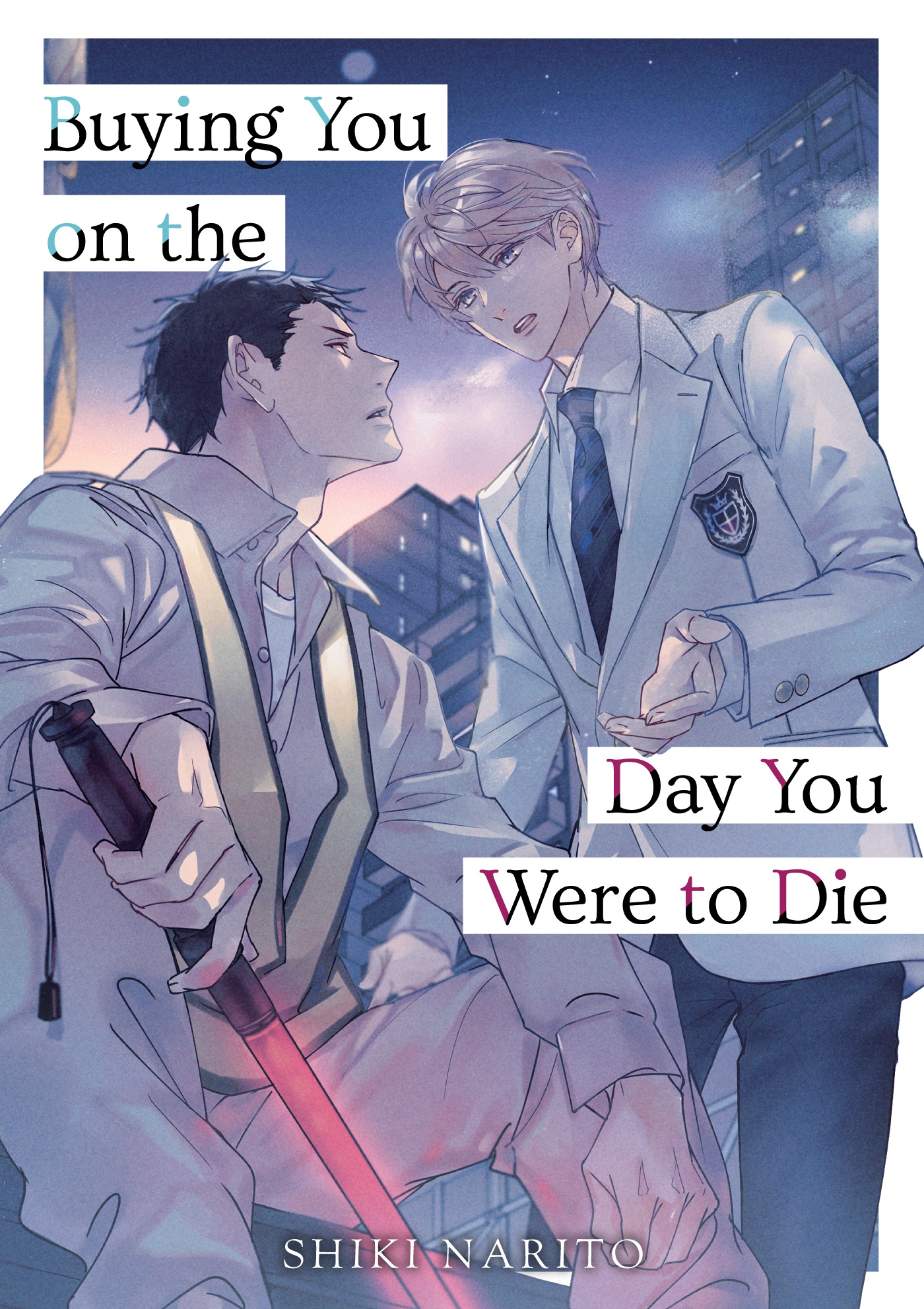
Part 1: The Tragedy of That Color
If you or someone you know is struggling with self-harm or having thoughts of suicide, call or text the Suicide & Crisis Lifeline at 988, or, chat with someone at 988lifeline.org. 988 services are confidential, free, and available 24/7.
Part 1: The Tragedy of That Color
“You wouldn’t happen to be for sale, would you?”
The voice came from above my head. The man I saw there was well-dressed, looking out of place in the icy February dawn at the construction site. He stepped into the dirt—more mud than dirt given the weather—in his fine leather shoes. I couldn’t even begin to guess at the price of his black slacks, yet he knelt down to meet my gaze. I had no real reason to care about him, but for some reason, I worried about the mud sullying his pristine white blazer.
Considering our surroundings, his careful movements felt awfully arrogant to me. His handsome face bore a fitting confidence. Completely unbothered by the wary stares pointed at him (mine included), he continued in a clear voice.
His gaze, now much closer than before, caught mine with its tactless frankness.
“I’d like to buy your—”
I thought his eyes looked like jewels. Those moonlike eyes, unblemished and striking, watched me with an intensity that made me want to flee.
His penetrating eyes, his voice, his smile, his very nature—I had always hated them, fearing them from that moment onward.
It was my first time seeing a three-story house.
That was all I could think about that day as I stood in front of his mansion. I didn’t want to leave room for anything else in my head, so I abandoned all other thoughts. I mean, his place had a larger footprint than my entire apartment building.
With completely white walls and a roof of the same hue, its beautiful appearance seemed totally unconcerned with potential maintenance costs. Somewhere far above, it seemed to have a spacious terrace... Or was it a porch? I noticed a table set above the wooden area, which jutted out from the large window on the first floor. Considering the footprint, there must have been a garden in the back.
Through a gap in the two-meter-tall front gate, I could see the front yard and its stepping stones that mapped a path to the building. Just getting to the front door was an entire journey of its own. Why? It was just the entrance to a private home. Who needed so much space?
I didn’t want to press the intercom button. Would a maid or butler come out to meet me? Having come in my dirty overalls from my construction job, I worried they’d shoo me away to keep me from ruining the white interior. But I had no choice but to press onward.
Even if this was a scam—or some human trafficking operation—this was the only hope I could cling to.
The man—or rather, the boy, since he had said we were in the same grade, meaning he had to be either sixteen or seventeen—had first appeared in my life that very morning. I had been working the graveyard shift, sitting on the side of the road with a few coworkers, taking a break while having my breakfast, when he’d walked up to me without hesitation. I had thought he wanted to ask me for directions, but he’d looked me straight in the eye as he asked me a question.
“You wouldn’t happen to be for sale, would you?”
When I sat there, too stunned to respond, he continued, “I’d like to buy your time—for two hundred thousand yen a month.”
It took me a while to process what he’d said. Even once I had, the meaning eluded me. It had to be a scam. Or perhaps he wanted me to sell something illegal.
Unconcerned by the fact that I had frozen in place or that my coworkers were steadily walking away—as if they were dissolving away—he simply said, “Do what I tell you and I’ll give you two hundred thousand yen a month.”
What does that even mean?
He continued explaining, unaware of his own incoherence as he thrust a piece of paper into my hand. On it was an address and the instruction to go there after work to speak with him.
It was beyond suspicious, but I wasn’t in a position to ignore it—not if there was a chance I’d make a killing.
Inhale, exhale. I steeled myself and pressed the button on the intercom. The response was immediate.
“Sakata Fumihiro-sama, we have been waiting for you. Please come in.”
I had yet to introduce myself, but the voice on the other side somehow knew my name.
I already hate this.
I got my loudly protesting heart under control and entered through the gate once it automatically opened. After twenty-three steps to cross the stepping stones and my ascent of the stairs, a set of double doors slowly opened in front of me.
Standing there wasn’t exactly the maid I had imagined; she was wearing a suit.
“Thank you for coming.”
A young woman with a kind smile curtsied at me. I recognized her voice as the one from over the intercom. Her polite mannerisms and gentle tone of voice invited me into the mansion without inspiring a drop of animosity in me.
I stepped into a pair of impossibly clean white slippers, wishing I could go home already.
After walking through the three-meter-long entrance hall, we passed through a hallway with paintings on both walls. It really did resemble the sort of “rich person house” you’d see on TV. Then we passed through a room that might have been the living room, judging by its size, and arrived in front of a closed door. When the maid opened it after a knock, the air carried the stirring sound of a piano.
I was no music critic, but I found the complex melody beautiful.
The grand piano had been placed in the center of the room. It wasn’t the sort of simple black piano you might see at school—it, too, was white, and it featured carvings of intricate patterns. The legs curled into snail shells, and the details extended to the piano lid.
On the piano stool sat the reason I was here at all.
“You really came!” he said with a big smile. He turned to me briefly, his fingers continuing their dance along the keys. I was impressed he could play without looking. He thanked the maid, told me to wait, and turned back to the piano so that he could focus on his performance. I sensed the woman exit the room, leaving us alone with the sophisticated melody filling the space. Not knowing what to make of this, I couldn’t help standing as stiff as a board.
He must have changed out of his clothes from earlier this morning into a white shirt. His perfectly ironed shirt was so pristine that it practically shone bright enough to hurt my eyes. Paired with his strange beauty, it was a sight out of a commercial for laundry detergent.
The man who had introduced himself as Nishikawa Kadzuki much earlier that day now sat there with the expression worthy of a carefree high school kid. Every time he glanced my way, he seemed genuinely happy to see me. Was he actually? I cast a suspicious gaze his way. The happiness was real at least, but its origins...?
Surely, he stood to gain something.
Ignorant of where my thoughts had led me, his performance continued. Suddenly, I heard something familiar in the melody. Searching my mind for what it might be, I frowned when I found my answer.
I’d heard it on the phone while on hold.
“I’ve kept you waiting long enough. Come! Sit, sit.”
Pulling his hands back from the keys, he motioned toward the corner of the room where a small round table with two matching chairs stood. I took my place in one of them.
“So, what’s this about?” I asked.
He nodded with a smile and got to business—or so I thought.
“How about we have some tea first?”
“How about no.”
“Not a fan of black tea? Would you prefer coffee? If you’re worried about the caffeine, we’ve also got rooibos.”
“I’m not thirsty. I just want to go home and sleep.”
“You’re not going to school?” he asked innocently, his face puzzled.
My spite surged forth, plain and clear. “I don’t go to high school.”
“But you haven’t officially dropped out.”
So, he had looked into me. A chill shot down my spine. Then again, for all his apparent innocence, I’d known from our first conversation that he knew more than he was letting on. He wouldn’t have made that offer if I were a mere stranger.
“Does it matter?” I grumbled. “If I don’t pass my classes, they’ll hold me back a year. Expulsion is just a matter of time.”
“Still—”
“State your business.”
Accepting his defeat, he moved from the piano stool to the chair accompanying mine, where he opened a drawer in the nearby sideboard. From the envelope he found within, he produced stacks of bills.
“Here’s one million.”
He placed the bills on the table with unbelievable ease. They felt like a prop.
Unbothered, he continued, “This should cover your living expenses for the foreseeable future as well as your mother’s funeral. What’s next? I can pay you daily, if you’d like. I’m also happy to cover the expenses of looking for your father.”
If he said anything else, I registered none of it.
The million yen sitting on the table formed a much thinner stack than I’d imagined. Paired with his frivolous words, it felt all wrong. I’d worked my ass off trying to make a fraction of that. He’d never worked a day in his life, and yet he offered me this incredible sum as casually as if it were a can of coffee. There was poise and grace in his movements, but the action itself was arrogant and vulgar. I swallowed the bile rising in my throat and plucked my next words from the depths of my exasperation.
“I haven’t accepted your offer yet.” I felt dizzy.
“You haven’t?”
“Tell me why. I feel like I’m being kept in the dark.”
“I thought I told you?”
“Then tell me again—in excruciating detail.”
Several hours ago, he’d said that he wanted my time. It left me confused and overwhelmingly frustrated for the rest of my shift. What was it exactly that he wanted me to do?
He spoke as if he were making a casual suggestion.
“I have three conditions: One, you must go back to school and focus on your education. Two, you must get accepted into the same university as me and attend it with me. Three, you must act like my friend. We’ll renew our contract every three months for a full duration of five years. I’ll give you a million yen now and then two hundred thousand every month.”
The conditions were as bizarre as the deal itself. Noticing the unhidden suspicion in my eyes, he wasted no time in explaining.
“From now on, you will go to school every day and actually study. You will continue on to your senior year, take your college entrance exams, graduate, and attend the same school as me for the full four years. It all ends once you’ve gotten your degree. Then you’ll be done, free as a bird. That’s why it has to be five years. Five years and one month, to be precise. But that’s not a nice round number, so let’s start with a one-month contract first. Look, I’ve even got it printed.”
From the same sideboard, he pulled out a sheet of paper. Indeed, it had the word “contract” printed at the top and a space for my signature at the bottom.
“And why would you pay money for all that?”
“Thing is, I don’t really have any friends.”
“Huh?”
And why should I care? was the first thing that popped into my mind, but since I couldn’t pass up on this deal, I resisted the urge to say it. I was certain the sentiment was clear from my expression, but even sitting opposite of me, he didn’t seem to notice. His smile remained unchanged.
“That’s why I want us to go to college together and why I want you to act like my friend. Therefore, I need you to study, I need you to graduate, and I need you to pass the entrance exams.”
“Okay, but why me?”
If all he wanted was someone to play his friend, it didn’t have to be me. He could have chosen someone from his high school or even approached someone once he was in university. My question should have been an understandable one, but he didn’t respond. He wasn’t hesitating either. He sat there in silence with a smile, meaning he was watching for my reaction to make fun of me.
I knew I didn’t like him.
Once I let the silence stretch on, waiting for his resistance to crumble, he finally spoke after a while.
“Because I know you can’t refuse.” He handed me a sleek, expensive-looking pen.
He really did piss me off. After all, he was right.
I returned home with a creak of my front door.
The building must have been over sixty years old by now. The door opened to a narrow five-square-meter room with the kitchen, leading into the only other room, which was double its size. I called this place home. Now that I’d returned from the Nishikawa estate, it felt smaller than ever. It was likely smaller than his entrance hall alone. In the larger room, my futon and tea table stared each other down. If I put a piano in there, I’d have no space to sleep.
My father wasn’t around, my mother had passed away, and since I couldn’t live on my own at sixteen, I was nominally taken in by some relatives. They didn’t send me any money. They were there on paper, but I had to make a living on my own. And just like my father, they quickly disappeared from the picture.
I hadn’t been to school in a while. I had initially wanted to balance school with my part-time job, but that didn’t last long—I hadn’t lasted long. I needed stamina to make enough money to get by. At this rate, forget about college—I’d struggle to graduate from high school.
Which would be fine. It happens all the time.
Whenever I got home, I took a bath and went to sleep. I skipped dinner; I had to save money.
My musty futon felt so cozy, I could just about convince myself it was all a dream.
That morning couldn’t have been real. A servant inviting me inside a three-story mansion, impossibly huge and pristine on the inside... I felt like I’d traveled to an entirely different world and had only just returned to my own.
But of course, life wasn’t that simple. The million yen in my bag reminded me of that fact.
The sum that had always been out of my reach was suddenly mine to keep. Was it a scam after all? Was I playing with fire? I really didn’t care anymore.
Looking up from my pillow, I could see the urn, placed on a piece of fabric I’d laid out on the floor.
Inside was my mother.
She was still here, since I lacked the funds for both a funeral and a grave to place her in. Still, no matter how long it took, I wanted to give her a proper burial.
“This should cover your living expenses for the foreseeable future as well as your mother’s funeral.”
“I’d like to buy your time—for two hundred thousand yen a month.”
“Because I know you can’t refuse.”
He had come thoroughly prepared. On top of that, he’d made an absurd, frankly audacious proposal. He said this was a contract, but I knew he wouldn’t let me go, not even in five years’ time. I’d probably never see another yen from him, and before long, I’d be made an accomplice to some crime, likely blackmailed into it.
Even so, I couldn’t bring myself to care.
My mother was dead. My father was gone. I had no family or education to speak of. Whatever future lay ahead of me, I wouldn’t be losing much by throwing it away.
What mattered most was having one million yen in my possession.
At least it meant I could give my mother the send-off she deserved.
“Do you even want to graduate?”
Sada’s tone was plenty intimidating. The school’s guidance counselor knew when to treat us like children and when to treat us like adults. He wore a stern expression this time, which of course he did, because without my ass giving him more work, he could’ve gone home early.
It was the first time I’d shown up at school in two months. After class, I was immediately summoned to the guidance counselor. Behind him, my homeroom teacher watched me awkwardly. For whatever reason, he couldn’t bear to look at Sada.
“I do, sir,” I replied simply. This was just another part of the ritual. As long as I went through the motions, it would be over soon.
“Good. You can make up for the credits you lost with an essay.”
“Yes, sir.” Straightening my back, I replied cheerfully, making sure it didn’t come off as forced. All of us would rather have been heading home now. United in our purpose, it should have been easy enough to accomplish.
Sada smiled sheepishly at me. “You’re welcome to work part-time, but remember your duty is to study. I understand losing your mother was a big shock, but you mustn’t lose sight of the big picture.”
Oh, please, tell me exactly what you understand.
What I was supposed to be doing was making enough money to get by, which was the only reason I showed up to school today at all. I wasn’t here to be lectured about my life choices, and I had no desire to be a model student.
His platitudes wouldn’t pay my tuition, would they? I wanted to both laugh and sigh, but I knew how to hide my feelings.
Smile, make it look genuine. Even knowing they get some sadistic enjoyment out of talking as if they know what’s best for you, you have to keep your ears down, show them your belly. Show no hostility, no malicious intent.
I didn’t have the power to stand up for myself—neither socially nor financially.
Don’t let it get any worse than it already is.
“Yes, sir.”
“If you’re tight on cash, tell your relatives. Ask them to give you a bigger allowance.”
“I will try, sir.”
I’d never had an allowance to begin with. I had informed him of this more than once, but now I only repeated the same stock phrases.
“I will try, sir.”
“Thank you, sir.”
“Let’s talk again soon, sir.”
Minors without an adult to support them don’t tend to get treated very well. When was it that I noticed a hidden expectation behind every “Are you okay?” When was it that I realized they simply wanted to avoid making any extra effort? When was it that I learned to say I was okay without hesitation? When did I get used to faking a smile?
I used to bite back at the playful insults, the barely disguised curiosity in their feigned concern. Then I slowly realized that even my reaction tickled them, and I finally stopped resisting. I learned that no one would help me. I understood the meaninglessness of asking for help at all.
Perhaps the kindest person in my life was the guy who gave me cold, hard cash, even if that came with its own risks.
“That’ll be all for today, then,” Sada concluded.
“Yes, sir.”
I left the guidance counselor’s office and headed straight for my shoe locker. I wasn’t upset enough to let it show. Checking my smartphone, I noticed it was almost 5 p.m. I had to go to the Nishikawa residence.
Sitting by the entrance was a familiar face.
“Finally done? Sada loves to ramble, especially when he gets to point out everything you’re doing wrong,” Toyota said.
“Sorry, were you waiting for me?”
“Well, we’ve got lots of catching up to do.”
“Sorry, I’ve got plans.”
“I’ll walk you there.”
After I changed into my outdoor shoes, we left together. Toyota and I were in the same class last year. We ended up separated this year, but he remained the only friend I could trust.
“Heading to work?” he asked, fiddling with the sleeve of his unbuttoned uniform.
“Yeah, I guess you could call it that...”
“So, not the construction job?”
“I’m quitting that one this week.”
“Huh, and you’ll be all right?”
“Oh yeah. I guess you could say I got hired? By this rich guy. The pay is surprisingly decent...”
“Uh, you sure that’s safe?”
“Honestly... No.”
“Don’t land yourself in hot water, man,” he said, patting me on the back playfully. Knowing he didn’t take life too seriously, I enjoyed Toyota’s company.
About halfway between the school and the front gate, I noticed a bunch of students gathered just outside the gates. The target of their attention couldn’t have been clearer.
“Yo, ain’t that a Lexus?” Toyota mumbled.
“A Lexus?”
“A fancy car, man.”
Toyota’s parents ran a car repair shop, but the brand name meant nothing to me. But in contrast to Toyota’s excited expression, I felt mine cloud over. I recognized the person I saw through the rolled-down car window.
“Sacchan!” he called, clearly looking at me. I checked behind me, but there was no one there. When I turned back, I could feel his gaze on me. Alongside the eyes of the other students. And Toyota’s too.
Who the hell is Sacchan?How did he get that from “Sakata”?
“You know him?”
“That’s my, uh...employer?”
“Sacchan, Sacchan!” He beckoned me closer.
I stepped forward, fighting to keep my face from cringing. The students’ gazes followed my every step.
“I knew I’d find you here if I waited long enough. I came to pick you up.”
“I don’t recall agreeing to this...”
“Oh, but this is so much faster. Get in. Would your kind, honorable schoolmate like to join us?”
Would my kind, honorable schoolmate like to join us?
Who says that? That your friend? Hop in! maybe. To which someone like Toyota might reply, Really? Let’s go! Except in reality, he stood two paces behind me and made no attempt to move.
“N-No, I’m good.”
“You sure? Okay, Sacchan, get in.”
Through the now open door, he pulled on my bag, practically dragging me into the car by force. Toyota waved at us with a fake smile. He made no attempt to save me. Then again, that easygoing attitude of his was why we were friends at all.
Then he spoke again. “Right, then. Farewell!”
Who says that? But just as the thought crossed my mind, he was already waving, sending the car down the road. The students gathered on the street reflexively waved back. It was a very posh wave.
I suspected it wasn’t the car that caught their attention, but rather the appearance of the person inside.
“Fasten your seat belt. Oh, and don’t tell anyone about our agreement. Even if I didn’t mention it until now,” he said, unbothered by my state of shock.
“Right.”
I decided to keep the fact I told Toyota this was my part-time job to myself. I guess if this is a scam, he wouldn’t want people knowing about it.
“You’re supposed to be my friend, so no one can know I’m paying you to be here. Also, you can be casual around me. We’re the same age, after all.”
“You’re also my employer.”
“Then I’ll make it a rule: No polite speech. Friends don’t speak like that. It’d be too obvious.”
“Eat my entire ass.”
“That’s the spirit.”
His smile was so obnoxious, I had to avert my eyes.
In the driver’s seat sat the woman who’d opened the door for me last night. Our eyes met in the rearview mirror, and she smiled at me.
“Since you’ll be spending time with me after school, do you mind if we pick you up each day?” he asked. “Your school happens to be on my way home anyway.”
“I’d rather you didn’t.”
“But this way you’d have more time to study. I saw your mock exams from last year, and they were pretty tragic. You’ve barely gone to school this year, right? You have a lot to catch up on.”
“Sounds like this isn’t up to me to decide...”
“This is your job, after all.”
“And that means you get to investigate my exam results from a year ago? That’s private information, you know.”
“I won’t do it again. I only needed them this time.”
His expression didn’t change. How much did he know? Money could buy you access to anything nowadays.
What else had he learned?
I briefly weighed the possibilities but soon realized that would get me nowhere. If he looked into my family, he’d know. If he approached me with that knowledge in mind, it wasn’t something I had to worry about.
Eventually the car arrived at the Nishikawa residence, effortlessly slipping through the automatic front gates, and I came face-to-face with the mansion for the second time. It seemed even more blindingly white than yesterday.
When we came to a stop, the front door opened as if on cue. A woman of remarkable resemblance greeted us, and I immediately knew she was related to my new employer. He urged me to get out of the car, and when I finally did, she smiled at me with a clear smile I already knew all too well.
“Welcome back, Sacchan. You too, Kadzuki.”
I practically flinched. Even the way she talked was similar. I didn’t have the energy to correct her about my name.
“Good to see you. Sacchan, this is my older sister,” he said, entering the mansion.
He removed his shoes, neatly tucked them away, put on his slippers, and just like that, he was gone. Only his sister and I remained.
“I’m Nishikawa Kasumi. Nice to meet you.”
“Yes, nice to meet you too,” I said, not quite sure what the point of this was.
She smiled wider and answered my unasked question. “I’ll be your private tutor from now on.”
I managed to keep myself from wincing. How was I supposed to study surrounded by these beautiful, upper-class faces?
Despite my exasperation, I proceeded to the living room that I’d passed through yesterday. There, I saw a little girl—perhaps old enough to be in kindergarten, I guessed—dart behind my “new friend.” They didn’t look alike. A distant relative, maybe?
As I pondered this, a voice came from behind me. “I’m back, Chisato. Did you say hello?”
It was the woman who’d picked me up from school. At that, the little girl bowed.
“I’m...Masudzuki Chisato.”
“And I’m Masudzuki Yuria.” Standing next to her, the driver lady bowed as well. “I apologize for the late introduction. I’m the Nishikawa family’s driver. This is my daughter.”
Masudzuki-san, her daughter, and Nishikawa’s sister all smiled, and it was like all three of them reflected his expression. Four perfectly alike smiles, altogether amplifying my dizziness.
“We’ll be spending lots of time together from now on, Sacchan.”
Five years of two hundred thousand yen per month—this offer had come at the perfect time. It wasn’t an unthinkably high sum, but it was out of reach for the average high school kid. It was enough to make a modest living, but a spending spree would eat up the budget for the month.
I could make more money living a normal high school life than working the graveyard shift doing physical labor.
That sounded too good to be true.
It was the best and the worst sort of work at the same time.
On our way home, Masudzuki-san addressed me from the driver’s seat. “Please don’t hate Kadzuki-san.”
I gave her a half-hearted acknowledgment from the back seat. I didn’t want to hear it.
“He’s a really good kid,” she added.
Again, I offered a noncommittal nod. I had no energy left; fatigue had made itself at home in my body. It was largely mental exhaustion. With help from the sister of that “really good kid,” I revisited material from middle school while he studied senior-level topics. Eventually, their parents came home. They had the same gentle aura and endlessly kind smiles that he did.
From there, I found myself joining them for dinner, having small talk, and listening to him play the piano. When I finally got to leave, it was past 9 p.m.
“Do good kids usually force their employees to drive people around this late?” I asked. It came out harsher than I’d intended.
It was as dark inside the car as it was outside.
I told him I could get home on my own, but he instructed Masudzuki-san to drive me. The road to hell is paved with good intentions. Such a fancy car pulling up to my run-down apartment building would only attract unwanted attention.
“Don’t worry about me. I enjoy this job, and I live right by the mansion. I have the Nishikawas to thank for that.”
I glanced into the rearview mirror, and Masudzuki-san’s smile reflected back at me. That same innocent smile as his...
It was unlike anyone else’s. I couldn’t explain what made it special, but there was something different about it. I had never seen such generous expressions until now. They had made me miserable all afternoon. My parents had never smiled like that.
Guess I’m the odd one out, I thought. It was like I was the weird one.
“I’m a single mother, you know. The Nishikawa family helped me when I needed it most. Thanks to them, I get to rent a nice place in the area for cheap and get all sorts of accommodations at work. They’re really good people. You can trust them.”
“How can I trust someone who would buy five years of my life?” I grumbled. I wasn’t even trying to mask my irritation at this point.
Imagine appearing out of nowhere and making someone do whatever you want with your money. Imagine pulling up to someone’s school unannounced and abducting them. Imagine keeping them in your house till late and making your employee drive them home. The audacity reminded me of my father, and it left me fuming.
“Yeah, that’s fair.” Masudzuki-san didn’t try to argue.
How far did this scam go? How many people were being tricked here? There were too many unknowns.
“If there’s anything you want to know, just ask. We’re both employed by the family; we should get along,” she offered.
“If you insist.”
It suddenly dawned on me that I’d never had anyone in my life I could trust.
How could I? Never relying on others had always been the right choice—not my teachers, not even my parents. It was the least I could do to keep myself safe.
By now I was starting to miss Toyota. I thought of my mother’s ashes.
Masudzuki-san pulled the expensive vehicle up to my run-down apartment. It was sorely out of place, and so was I emerging from it.
“See you tomorrow!” Masudzuki-san called after me. I climbed the rusty metal stairs without turning back.
At the top of the stairs, I found someone sitting in front of the door to my place.
“That’s the car from earlier. Were you working this entire time?” Toyota asked.
“You again?” I teased. He grinned in response.
Toyota sat in front of my place, a plastic bag from the convenience store on the ground next to him. I saw Suzuka, his seven-year-old sister, a little ways away.
“Let’s have dinner. I know you’re hungry,” Toyota said.
When I let him inside, he jumped over the futon and pulled over the low table, on which he placed the convenience store bento. Then came the snacks and a two-liter box of juice.
“I already ate,” I said.
“You never eat dinner,” Toyota replied.
“Don’t worry, I won’t turn down free food. I’m always hungry nowadays.”
“You hit a growth spurt? Watch you become even more of a beanstalk than you already are.”
“Great, just what I needed.”
Toyota seemed to think of this as some sort of bit.
“I’ll bring you food if you let me stay at your place.”
Toyota had suggested that last June. When we started hanging out, my mom was in the hospital and my dad was gone, and I told him I lived alone. Toyota had nowhere to go, and I had no money, so we made it work.
I could see a bruise at the edge of his big grin. That was new. “Couldn’t dodge it this time?”
“It’s harder than you think.”
“Want some antiseptic for that?”
“The cuts are only in my mouth. I’m good.”
When I brought out the cups, Suzuka poured herself some juice. She also filled our cups without being asked, which I took as a good sign. To my relief, I didn’t see any bruises on her face or arms.
“You okay, Suzuka?” I asked.
“Mm-hmm, I’m fine.”
When they first came to my place, she’d been too nervous to talk to a stranger, but she’d gotten used to me by now. She’d reply when I spoke to her. Still, she refused to look at me even now.
Having eaten, Suzuka immediately fell asleep on my futon.
“Well, how much are they paying you?”
“Two hundred thousand a month.”
“Hey, that’s great.”
I told Toyota everything. It was too late to worry about the information reaching the wrong ears. He seemed impressed. With a mouthful of chips, he asked me what sort of rich folks I was working for.
“I don’t know. All I know is they’re loaded.”
“I don’t recall any fancy houses like that around here.”
“It’s about twenty minutes away by car. It’s toward the mountains, a huge white mansion.”
“Huh, which school does he go to?”
“Shirasaki Kaijo.”
“The fancy private school? They wear those white blazers. Can’t say I know anyone there. Why did they choose you?”
“Maybe they were throwing darts at a map.”
Why did they choose me? I wanted to know that myself. Why not Toyota? If they were looking into high school boys in the area, he fit the bill. Plus, he was way smarter and friendlier than I was. He’d have done just fine.
“So, how long are you gonna work for them?”
“For now, until I can hold a funeral for my mother.”
“Still? It’s been, like, a year. Then again, I know you haven’t had anywhere to put her.”
Our eyes turned to the urn. Toyota had never seemed freaked out by it being in my room. He’d only asked if my mom was in there. When I said yes, he prayed for her.
“I could cremate her only because it was required by law.”
Toyota looked at me. The warmth of his gaze felt awfully reassuring. It wasn’t overbearing, it wasn’t some deep affection, only a sense of kinship. The bare minimum level of concern. It was all based on having something to gain or lose. That felt just right to me.
There was something scary about the eyes of everyone in the Nishikawa residence. They all seemed transparent, and not in a way that represented their pure nature. It was a wise, discerning sort of gaze that made me feel like they could see right through me—my shallowness and all the dark memories I wanted to hide included.
I didn’t understand it, and that scared me. They might as well have been an entirely unidentified species, for all I knew.
“With a million yen, you should have more than enough for a funeral, right?”
“Not really. It might cover the funeral, a spot in a cemetery, and maybe a little of her medical debt. It’s still not enough.”
“Oh. That sucks,” Toyota said in a mostly emotionless tone. Apart from the compatibility of our personalities, we also bonded over our shared misery. We each felt at ease around someone who knew how hard life could be.
It was a simple sort of camaraderie.
“What will you do after the funeral?”
“Don’t know. Haven’t thought that far.”
“Bullshit.”
And because we were so close, I wasn’t surprised to hear him say that without judgment. Having been in a similar situation, having experienced similar emotions, our thoughts tended to align. Toyota must have known what this felt like, but he wouldn’t stop me.
That was a kindness on his part. It meant more to me than him trying to stop me on impulse.
Toyota watched Suzuka lie fast asleep on my futon. As close as we were, he never looked at me the way he looked at her.
“Sakata, I don’t think I can do this much longer.” His smile was at odds with his words, but I could tell he meant it. “It isn’t fair.”
“How’s your mom?”
“Same as always. She won’t do anything.”
Toyota’s father often flew into a violent rage. He didn’t hit Suzuka—he’d set his sights on Toyota and his mother instead—but Toyota said it was only a matter of time before he hurt her. He intervened when his father abused his mother, but when he became the target, his mother only cowered in a corner.
Whenever his father lost his temper, Toyota came to my place with Suzuka.
I understood what he was going through better than most. Before we learned of my mother’s illness, my father would sometimes come home drunk and hit her. Whenever it happened, everything screamed at me to run away. I didn’t want to see it, I didn’t want to feel those emotions, I didn’t want to hear his yell, her screams, or his punches landing.
That was why I decided to offer my small apartment as a refuge for the Toyota siblings.
“You can bring your mom here too. We’ll make space.”
“Don’t bother. She won’t leave him.”
Taking a sip from his plastic cup, Toyota gazed at his sister again. He must have been checking if she was about to wake up.
After a while, he asked, “Have you ever thought about it, Sakata? Why my mom will just sit there crying instead of helping me?”
“Can’t say I have.” I really hadn’t. Why would I?
So what was that awful feeling in my chest?
“There are some things only an adult can do. Did I tell you how I tried to take Suzuka to a shelter once? I asked them if they could let her stay. They called my mom and she told them everything was okay, so they made us go back home.”
“But things aren’t okay.”
“I guess she’s okay with it by now. She thinks she’s got it all worked out. You know, Sakata, I think I finally get it. My mom made her choice. She’s made the same choice over and over for a long time. When he hits her, when he hits me, when Suzuka has to watch—between her safety and our lives, she’s choosing her safety. Why should we have to put up with that?”
“So you’re gonna leave for good?”
When he first came to my place, Toyota told me of his plan: When he graduated high school, he would take Suzuka and leave the city altogether.
“After all these years, I can’t say I’m scared of him or that I’m miserable or whatever anymore. I’m used to it, and if it messed me up, then I’m gonna stay messed up and figure that out on my own. But Suzuka shouldn’t have to go through that. She’s got her whole life ahead of her. I can’t change the past, but I can give her a better future. You get it, don’t you?”
“I do.”
After all, he was the one who said there are some things only an adult can do.
“We’re graduating in a year. We’ll be adults then,” he commented. Voicing that reminder sounded more for his own benefit than for anyone else’s, but even if he had doubts, he wouldn’t hesitate. He had strength in his eyes. He felt responsible for overcoming his fear.
I watched this as if it were a story playing out somewhere far, far away.
If I had a little sister like he did, would I have felt the same way? If I hated my parents as much as he did, would I still have been able to show people kindness?
I hated my father too.
But I didn’t feel the way Toyota did. I wasn’t sure if I had ever felt like that. I wanted to ask him about it, but it felt too conceited of me, so I kept quiet.
Early next morning, Toyota carried Suzuka home.
Just as he’d promised, he picked me up from school every day going forward. Every day, I would go to the Nishikawa residence, be tutored by Nishikawa’s sister, and have dinner with the whole family as well as Masudzuki-san and her daughter. After the meal, he would ask me to listen to him play the piano, which I did.
Once I had followed this routine for a month or so, the fatigue had slowly started to set in. The mental and the physical, yes, but the greatest was how overwhelmed my brain got from learning so many new things.
I tried to hide it in front of my employer, but I suspected my fatigue was apparent from my behavior. One day, he dropped his typical smile, even appearing concerned, as he asked, his fingers on the piano keys, “Are you sure you’re all right?”
Although I was unsure how to best reply, I was at least able to conceal my inner turmoil.
I watched his smiling eyes, trying to read his thoughts.
They were a mystery to me.
“I’m fine.”
“Are you sure? I know my family can be a lot. They often tell me they want to learn more about you, but I imagine it feels more like an interrogation.”
“Do they know?”
He answered with a question of his own. “Do they know what?”
He genuinely sounded curious, which made me feel like the only guilty party. My fatigue worsened at that.
“Do they know that I’m only here because you pay me?” I asked.
“They know.” He played a rhythmic tune. There was meaning in this complex piece. It had a happy, carefree sound. “They know everything.”
“And they’re fine with it?”
He burst into laughter as if the answer should have been obvious. “They are.”
They seemed like good people—how could they accept their son engaging in what surely must be some form of human trafficking?
“Well, I’m glad they don’t bother you, Sacchan.”
Then, remembering something, he stood from the piano stool. Just like a month earlier, he opened the sideboard, pulled out an envelope and some paper, and placed them on the round table. The sound of paper brushing against paper was the only thing to break the silence across the room now.
“Here’s your pay for this month. Well done. And since we’ll be renewing our contract, I’ll need you to sign this.”
Having said that, he returned to the piano. He even left the pen on the table, so I sat in the chair and signed the paperwork.
Then, he played a more intentional tune. I found it grating. Just like yesterday and the day before, he always played the same pieces. He always played this piece in particular at least once. I didn’t know what it was called, but the melody had lodged itself into my brain.
Was it ironic that I hated his favorite song?
As I listened to him play, an electronic sound of the same melody rang in my ears.
I didn’t know anything about music. He asked me to listen anyway, two weeks ago now. He told me listening was part of my job.
I watched his face intently. Even when facing away from people, his eyes seemed feverish. He looked like he’d never experienced pain.
Unable to go to school—much less graduate—until recently, I’d barely made enough to get by. Because I didn’t have the funds to give my mother a proper burial, her ashes still sat in my room. I’d do just about anything for the promise of money; we couldn’t possibly have been more different. He could probably spend his life doing whatever he wanted.
I couldn’t understand how this situation had come to be, but still...
I looked at the two hundred thousand yen in the envelope.
Whatever his reasons, however I felt about them, his whims brought me cold hard cash. This was the undeniable truth, frustrating as it was. Not to mention that he was saving my sorry ass.
Perhaps I had invited him because he already knew everything about me, or the guilt was eating at me, or the sheer exhaustion was draining me, or a mix of all three.
When he finished playing, I found myself asking, “Do you want to come?”
“Hmm?” As he turned around, there was no trace of doubt in his expression.
“I’ll be holding a funeral for my mom. Would you like to come?”
He was the one paying for it, after all—it only felt right to invite him. At least, that’s how I justified it to myself.
“Can I? Would that be all right?”
“Not like anyone else is coming.”
He didn’t seem surprised by the invitation; he just smiled.
“No one’s coming. I’ll be the only one there,” I reiterated.
“I’ll be there,” he said cheerfully.
It was only when I arrived at my run-down apartment that I realized that, perhaps, I felt lonely.
And I realized that I hated the thought of leaving all on my own without a word to anyone about it.
The funeral was held two weeks later. It was a mildly rainy day. In the end, I hadn’t told anyone else about the ceremony. My mother’s parents were dead, and if she’d had any friends, I didn’t know them. I didn’t know the whereabouts of my father. When I tried to call him, he never picked up or called back. I had no way of reaching him.
I woke up early in the morning and cleaned my room. It felt strange to think I had lived here with my parents at one point. The only clue to their lack of presence was the impossible amount of dust that had built up.
We never owned very much, so there wasn’t much to throw out. Still, I managed to fill a trash bag with whatever was left in the fridge, some shrunken clothes I found deep in the dresser, textbooks, notebooks, sneakers I wouldn’t wear today, and my school shoes. Everything I spotted, I would dump so that I would have no regrets never coming back.
Even so, I couldn’t throw out my mom’s things. I wanted to laugh at my lack of resolve. The responsibility of dealing with her things was supposed to be on my shoulders.
I didn’t own any clothes suitable for a funeral. I flattened out the wrinkled uniform I bought used when I started school and wore that. In one hand, I carried my mom’s ashes and in the other, two full trash bags, and I left the house. I left the bags at the trash collection spot on the way. It was Sunday, so they wouldn’t pick them up today. But tomorrow morning, they would be gone.
I headed to the funeral hall, holding my mom’s ashes close.
Walking the familiar path, I sentimentally started thinking of the past. I’d taken it countless times before, but I didn’t have many memories of my family to reflect on.
When I was in middle school, my mom’s illness had worsened, and I began tending to her while taking care of myself and my father. I struggled to summon a memory of the three of us going out together. It didn’t even have to be of a time before mom got sick.
All that came to mind was the smell of alcohol, my father’s rage, and my mother’s tears.
It felt like my mind was being squeezed. The cold air reminded me of the pain in my chest that now rested only in me, and I couldn’t share that feeling with anyone. It was a chill that froze my fingers to the bone, a constant torment. When my mother died, I think something vanished with her—something more than just her hands that had always kept me warm.
Everyone felt like a stranger to me, and I couldn’t care anymore. Not about things, not about people, not even about myself. I accepted that I was being left behind. I wasn’t particularly bothered by this.
The world always looked like winter to me. I had no reason to love it.
When I arrived at the funeral hall, my invited guest was already there, wearing a clean black suit. The car and Masudzuki-san were nowhere to be seen. Having watched me and the undertaker make preparations, he lit the first stick of incense.
With his palms pressed together, he kept his eyes closed. He remained like this for what felt like a really long time.
He couldn’t possibly have had anything to say. He had never met my mother. I watched him the entire time, imagining the silent conversation he might be having with her.
When he was finished, he naturally sat next to me.
We listened to the chanted sutras from the monk I’d hired. At its conclusion, we remained there in silence. The undertaker also stepped away, leaving the two of us sitting in the spacious hall alone. I had reserved the place for the next three hours and expected we would just stay there like that. No one else was coming.
The light rain turned into a downpour outside. I could hear its pitter-patter growing louder. As if finding the spaces between the raindrops, he eventually asked, “And your father?”
“Won’t pick up when I call. Do you know where he is?”
“Not his address, though I think I could find out. Do you want to know?”
“Not particularly. Not if he didn’t bother to show up.”
“I see” was all he said.
I wondered if my father really didn’t plan on coming. I understood he wouldn’t come to my funeral, but I thought he just might come to mom’s. He must have loved my mom at one point.
Still, I didn’t want to see him. I didn’t want him to come. Especially since he was here. I didn’t want my father to lay eyes on that guy.
I truly did not want to think of him as my father. He was never a father to me, but he was my mother’s husband. My mother loved him, and he should have loved her back.
Whether I liked it or not, half of my DNA was his.
The sound of rain filled the hall. Trying to drown it out, I asked, “Shouldn’t you be heading home?”
“I’ll stay until the end. Then we’ll go back together.”
“Go where?”
“Back to my place.”
This sounded like a firm plan already set in place. I was slowly beginning to learn that once he had made up his mind, it was difficult to diverge from that charted course.
“Fine,” I replied offhandedly, looking to the urn reverently displayed on the altar. If we were going back to his place, I thought of leaving the urn there. She might be happier in the care of the Nishikawa family—even though they were total strangers to her—than being placed in a grave that no one would visit.
“What was your mother like?” he asked.
I turned the question over in my mind. My mother had died in March of the previous year. What came to mind first was her thin frame and her pale skin, her body ravaged by the sickness, but that wasn’t right. That wasn’t who my mother had been. She was cheerful and kind. She was more than she had been at the very end.
And yet, these were the words that came from my mouth:
“I don’t think she was happy.”
He listened without protest, without laughing. He wasn’t surprised, because he must have known. I really wished he’d told me everything he’d learned. That way, I wouldn’t have needed to say anything at all. That way, I wouldn’t have had to put those thoughts into words.
“Even if she hadn’t gotten sick, she would have spent her life being yelled at by my father.”
When they discovered her heart condition, she quit her job and then cycled between inpatient and outpatient care. We never had that much money to begin with, and it became increasingly difficult to cover her medical expenses. Those became the priority, and we cut back on just about everything else.
My father took it the worst. He was never the type of person to work hard. He never earned enough money. He expected all sorts of things from my sick mother while he spent his time getting drunk. He would often yell at her that we didn’t have money. “It’s all your fault!” he would insist. How many times had he said that to my mother? How many times had he said it to me?
“It’s your fault we’re poor.”
Yeah. Our lack of money was the root of all evil.
If only we had money, we’d be fine. If only we had money, we would be happy...
I never believed that.
With or without the money, things would have fallen apart sooner or later. No, in truth, our family had been falling apart for as long as I could remember. My mother’s illness was just the final push. Happiness had never been ours to keep.
My father stopped coming home a few days after my high school entrance ceremony. When I got home, he wasn’t there, and then I never saw him again. More than surprise or sadness, I experienced acceptance. I already understood it was just a matter of time. If anything, I thought it to be the most peaceful conclusion.
My father couldn’t handle it, though I don’t know if it was poverty or seeing my mother’s disease progress in the end.
I remembered telling my mother in a whisper that he was gone, like it was the greatest secret. She seemed sad. She’d been stuck in her hospital room, always waiting for him. Her husband would abuse her verbally and sometimes even physically, and she’d waited for him anyway. I couldn’t fathom what that felt like.
Ever since that moment in her hospital room where she shrugged and smiled at me, blaming herself as I rubbed her pale hands, I’d been thinking...
What was love anyway? What was it supposed to be?
Was it something I had? Was it something I received? Was it something my father had given? Was it something my mother received?
My mother died roughly a year after my father’s disappearance. The last time I saw her alive was before her heart surgery.
A faltering heart rate monitor that eventually goes flat, a family that breaks down crying—I couldn’t imagine any of those things. When they brought her out of the operation room, there was no monitor, I was the only family she had, and I couldn’t cry anyway.
My mother’s eyes were closed. I didn’t know whether she was sad or distressed when it happened. Did it hurt? What was the last thing she thought? Could she even think in those last moments? What would she tell me now that she was leaving me all alone? What did she want to tell her husband who never showed up?
Had my mother really loved my father?
Had my father really loved my mother?
If they had, why did their love end so wretchedly?
All alone, not knowing if anyone would come, she waited in the mortuary for someone to pick her up.
I had no reason to love the world.
I’d seen what love does to a person.
But I kept working, kept living while chipping away at my sanity because I had to do something with her ashes. Once I finished that final item of business, once my mother’s funeral was over, I’d have nowhere to go—nowhere I wanted to go, nowhere I wanted to stay.
My trash bags would likely be found tomorrow and disposed of. I knew I wouldn’t be there to pick them up.
The rain had eased up some, but it was still audible. I suspected the rain would continue for the rest of the day.
My mother hadn’t been happy. That was the undeniable truth. She’d been forced to endure all sorts of abuse from her husband, and then she suddenly died. Even after her death, her remains didn’t get treated much better. I was never able to give her the happy life she deserved, so I hoped to give her the best send-off I could manage.
That was my responsibility.
“You know, Sacchan,” my employer said out of nowhere, breaking me from my thoughts. His beautiful, clear voice reached me and warded off the cacophony of the rain. “You’re really kind.”
“I’m really not... This was just something I had to do.”
I couldn’t cry when my mother died, and I couldn’t cry now. Grief was something distant, and even though I sensed its presence, it never got any closer. I knew it was heartless. Having me as her son was one of my mother’s misfortunes.
“No, you are kind. I can tell you’ve always been. You deserve to be loved, to be happy.”
His candid words came as a shock, which was why I reflexively replied with something equally unexpected.
“Love can eat shit.”
I tried to interpret what I even meant by that. I had blurted it out without thinking. Perhaps I was voicing my mind.
Love can eat shit.
Love never existed in the first place.
I couldn’t start building a sandcastle if I knew its fate was to collapse. If one day something would fall apart, I was safer never experiencing it in the first place.
“You still haven’t cried today. Is there something keeping you? If you started bawling, then at least I could comfort you like a gentleman.”
“Cut it out.”
“What do you want for dinner tonight?”
What a change in subject.
“Nothing in particular... We haven’t even had lunch yet.”
“By the time we’re done, it’ll be that awkward moment between afternoon and evening. Mom said she could get us sushi.”
“Sushi?”
“Apparently you’re supposed to have sushi after a funeral.”
“Huh” was the best reply I could summon.
No one was coming. The undertaker was in another room, the monk had left, and the door wasn’t opening. There weren’t any footsteps to hear—only the rain outside, which faintly reached my ears through the walls.
He didn’t say anything else.
Alone in the hall, we remained silent. We waited for the rain to stop.
He spoke again.
“I hope one day you get to grieve as hard as you want.”
I couldn’t find the energy to respond.
After the funeral, Masudzuki-san arrived, and we headed to the Nishikawa residence. We were led to a Japanese-style room that I was seeing for the first time. Inside, Nishikawa’s parents and Kasumi-san were waiting in full funeral dress. As promised, on the table were boxes of sushi. I didn’t understand what was happening.
I hadn’t felt like crying until now.
I was still practically a stranger to the Nishikawa family; they had no reason to go out of their way to do this for me. And yet they did, as it were the most natural thing in the world. Their concern was a little awkward, but I couldn’t say a bad word about them. Something resembling warmth filled my chest. Unable to ask about my mother, they smiled throughout the meal as best as they could.
Perhaps it made me sentimental. The sort of peaceful meal I had almost never experienced with my parents must have gotten to me.
I wasn’t in my right mind. That was how I explained how I ended up staying the night in his room.
“You sure you want to sleep on the floor? We could share the bed.”
“I’m sure. I won’t fit.”
“Yeah, it’d be cramped, but who cares?”
“Let it go.”
I could see the ceiling far above my head. It, too, was white and pristine. I was next to his bed, where he now lay.
I thought about how today should have ended, about the safest place I would find myself in when it was all over.
He’d distracted me from my plan.
I could hear him slowly breathing in his sleep.
If I left now, would he know?
I sat up, trying to make as little noise as possible, but his hearing was too sharp. He stopped me in my tracks.
“Stay the night. It’s dark out.”
“I can go home.”
“Sure you can, but you don’t have to.”
His hand came from the bed, lightly pressing on my shoulder. I gave up and lay down. Satisfied with that outcome, he fell asleep again.
Right. I guess I didn’t have to go home.
I closed my eyes and started wondering where my usual caution had vanished. After the day we’d spent together, I had come to trust him more than I ever intended. I didn’t know whether he was a good person yet. I still suspected he might be trying to trick me. And yet, I knew one thing for certain.
He wouldn’t throw out my mother’s ashes.
That was enough.
Again, I found myself thinking about the trash I left in the collection spot that morning. Early tomorrow, the garbage truck would come and take it away for good. I didn’t intend to go back for it. And yet, I regretted leaving it.
Just like I regretted how life had grown so distant.
I’d missed my chance to die. I hadn’t expected to ever go home again.
It was a simple weariness, not deep enough to warrant getting sentimental, but one that I couldn’t ignore, so I drew a deep breath to drown it out.
“You’re alive.”
That was the first thing Toyota said to me during lunch break on Monday, clearly surprised.
“Why wouldn’t I be?” I replied casually. He let out a “hmm” in suspicion. He turned around the chair in front of me and sat down. In his hand was an expired pastry from the convenience store that he worked at. He was always bringing me those secretly.
“Well, look at you.” He laughed, pointing at my hands. It was a bento from the school store. I hardly ever checked what they had on sale, but when I opened my wallet, I realized I could already afford it and felt dizzy on the spot. I figured that was how rich folks must have felt. With considerable excitement, I bought one of their larger bentos. It had several different fried foods on a bed of rice.
Now that I could eat without worrying where my next meal would come from, I was hungrier than ever. I might have grown a little taller already.
“Want some fried chicken?”
“Thanks, man.” When I lifted the container in his direction, Toyota snatched a piece without hesitation and continued, “Seriously, though! I never imagined you’d still be around after your mother’s funeral. Guess I was wrong.”
“You thought I was gonna die?”
“I’m not saying you were gonna die. Dunno... I thought maybe you’d skip town, or you’d stop coming to school or something. I definitely didn’t expect to see you having lunch at school today.”
“Huh.”
“So, what now?”
“Haven’t decided.”
One of my mystery fried foods was a white fish. As I chewed, I remembered the dinners we had at the Nishikawa residence every night. I’d been too stressed to taste any of those meals. I was enjoying this bento far more.
Well, except for last night.
My world had changed. It had a little more color now than before.
“Toyota, were you at my place on Sunday?”
“No. My father hasn’t come home.”
“You wouldn’t have...moved any trash bags by any chance?”
“What? Did something happen?”
“No, don’t worry about it.”
I’d ended up staying the night at his place on Sunday and went home early the next morning. The trash bags were gone by then. I sighed, thinking trash collection just had to happen early on the one day I wanted to dumpster dive, only to find them by my front door, as if they had been waiting for me all along.
I thought Toyota might have noticed my name on the notebooks or recognized my shoes through the transparent bag and brought them back, but...
If it wasn’t Toyota, I couldn’t think of many people who would come knocking on my door.
“I’ll keep working my part-time job for now. I still don’t know why, but the money’s good. That’s the only way I can keep going to school,” I explained.
Toyota smiled in satisfaction. “You keep at it. If anyone comes for your ass, I’ve got you.”
“What about you?”
“What about me?”
“Your plans after graduation. You still planning to...?”
“No change there. I’m taking Suzuka and getting the hell outta there.”
Toyota smiled the way he always did. It felt so good to see a working-class smile for a change. At least here, I was normal.
“Better start saving.”
As I stared at his smile, so different from the Nishikawas’, I wondered why life was so unfair.
Since I’d started working for the Nishikawa son, my finances had taken a sharp turn for the better. I’d held the funeral, I’d bought a plot in the cemetery, I’d paid off my mother’s medical debt, and I still had money left over.
Every payday, my life improved. I’d started having dinner at his place, I’d begun choosing my lunch not based on price but on nutritional value, and occasionally, I even experienced the urban legend known as breakfast. I got new bedding for the first time since I was little, and I fixed up the kitchen and bathroom.
It had been a while since I could live without worrying what I would eat the next day. Having improved my nutrition and my living conditions, I slept deeper than ever. I slept less in class too.
My days were endlessly peaceful.
Things were going so impossibly well, it scared me.
Even after six months, he wasn’t showing any signs of pulling the rug from under me. He gave me my paycheck as usual, and my going to college was still on the table. I went to school like a good student, and I was taken to the Nishikawa residence like it was cram school. Masudzuki-san drove me home, and I slept. I went to my mother’s grave every month on the day of her death. My father’s whereabouts remained unknown, and I had no desire to change that.
I regularly got my copy of the contract to keep. I started thinking they might start forming a nice stack at this rate.
Eventually, it was the fall of my final year in high school. I somehow got a B on my mock exams, and my teachers praised me for the first time ever.
This must have been what a normal high school life looked like. I still couldn’t wrap my head around this being my life now. I’d never gotten as much as a whiff of it until recently.
Was this okay?
This must have been the privilege known as happiness, and it was undeniably mine, thanks to him. It showed no signs of going anywhere either.
What if I just kept going like this?
Did I deserve to be this happy?
I couldn’t help thinking of my friend that didn’t get to have it so easy.
“Kadzuki-san was really pleased,” Masudzuki-san said, gripping the steering wheel, sounding very pleased with herself.
Going along with my employer’s whims, I always ended up getting home around 10 p.m. Masudzuki-san drove me back even that late in the day. Out of concern, I once asked what her daughter was doing at this time. She told me that after driving us to the Nishikawa residence from my school, she went home for a bit, had dinner with Chisato, put her to bed, and came back. She was also allowed to drive Chisato to and from day care during her work hours, which was unconventional but certainly helped to make it a good workplace.
“I heard you got a B?”
“It was a fluke. It’s not enough to pass the entrance exams.”
“Kasumi-san also praised you. She said she couldn’t have imagined you’d improve so much when you first arrived.”
We were alone in the car. At some point in the past few months, we’d started talking the entire drive home. She was friendly, and I liked her. She was very open about talking about her own life.
Him, the Nishikawa family, the people they employed—they were all good people to an upsetting degree.
“I’m getting paid to get into college after all. It’s part of the job.”
“But you’re enjoying it a little, aren’t you?”
“I guess I am.”
I found myself smiling before I could help it, and I quickly changed my expression.
I had never found studying fun until recently. Both homework and my classes felt like a huge waste of time that I’d much rather spend with my mom or working. Now that the former wasn’t an option and the latter wasn’t a necessity, and my schoolwork was beginning to make sense, I’d come to enjoy it a little.
I had never even intended to go to college.
“And what would you like to do in college, Fumihiro-san?”
That was a valid question now that it was beginning to look like a realistic consideration for the near future. It was like I had found myself in some parallel universe.
“I don’t know. I don’t even know what it’s like. I don’t know anyone who’s gone.”
“I can relate. Kasumi-san talks about her experiences a lot, and it sounds like a lot of work but with many fun aspects. If Chisato wants to go when she’s older, I want to give her that opportunity. So once you’re in college, tell me all about it, all right?”
Six months. A year. Going to college. Now I knew what to expect from my future, but a sense of unease lingered within me. I was only on this path because of him—because I happened to be the target of his whims.
It never had to be me.
Studying next to him, having dinner together, going to college, sitting here in this car with Masudzuki-san...
The car stopped in front of the stairs to my wooden apartment building.
“See you tomorrow!” Masudzuki-san called. I turned around and waved goodbye.
The rusty stairs and the creaky door didn’t bother me nearly as much as they used to. I displayed my mom’s mortuary tablet on a small shelf in my larger room.
Having already eaten at the Nishikawa residence, I only reviewed my notes before going to bed. I dove into my freshly aired-out and fluffed-up futon. Technically, what I did was no different from what I used to do before I met him, but it felt like a whole new world.
I wished Toyota could have this too.
We were in the car when I said, “Nishikawa, I need to ask you something.”
Having walked in the hot, humid summer weather, my skin was cold from the sudden blast of air conditioning in the car.
As I looked forward, Masudzuki-san adjusted the rearview mirror to watch me. When our eyes met, I quickly turned away. Was I doing something wrong?
Meanwhile, his expression was the same as always. “Yeah?”
“Could someone take over my position?”
“I’m afraid not.”
“I’ve already got a person in mind. I’ll introduce you.”
“I said what I said.”
“He could really use the money, and I—”
“Sacchan.”
He interrupted before I could finish. His expression still seemed the same to me, but once I took the time to really see him, I realized I was wrong about that.
His expression didn’t change, but the feelings behind his face did. He was putting on his usual smile now. He was forcing himself to, and what his face concealed seemed far from kind. He spoke in a way that made me think he was holding himself back.
“I hired you, not anyone else. If you want to quit, I can’t stop you, but I’m not looking for a replacement.”
“But why me? Why can’t it be someone else?”
I had asked the same thing at the very beginning. He’d replied after a prolonged silence: “Because I know you can’t refuse.”
I had assumed he’d been mocking me with that silence. Now I realized this wasn’t right either. After studying, talking, spending time together for so long, I’d gotten to know him better than ever.
He had a habit of smiling while wrapped in his own thoughts. He was quiet again, only because he needed time to think.
About what? What could he possibly tell me now?
Finally, he said, “Because I want to go to college with you.”
I knew he was lying. We’d known each other for less than a year; he had no reason to be so attached to me. There was some reason for why it had to be me. I just didn’t know what it was.
I looked into the rearview mirror again. I didn’t avert my eyes this time.
Masudzuki-san smiled sheepishly.
I managed to catch Toyota three days later after school. I invited him to a nearby McDonald’s with the promise of paying for his meal.
“You’re not working today, Sakata?”
“I’m off every third Tuesday of the month.”
“Why? Is there a supersale in the supermarket?”
“He has piano lessons, apparently.”
Toyota went ahead and ordered two burgers, a large set of fries, and even an apple pie. It added up to quite the price with my own food order, but I had no issue paying for the both of us. Before this strange job, that would have been my entire week’s food budget. It made my head spin, which was becoming a more frequently occurring sensation. It was like I lived in a different world now.
“This is awesome. Thanks, man.”
He sank his teeth into the burger with a big smile. It somehow only made me feel more guilty.
As we ate, I told him about everything. Of course, telling him wouldn’t change anything. It wouldn’t help Toyota. Now that my employer had rejected my idea, I couldn’t do anything. I was just reporting the results to him. It didn’t mean anything. If anything, it was self-indulgent.
“But if you want the job, I can ask again,” I offered.
Toyota had been listening in silence until now. He looked me straight in the eyes. “It’s fine. I told you I’m skipping town after graduation.”
“But if you had money, maybe you wouldn’t have to go.”
“It’s not about money,” Toyota said. His voice was all too stern, considering he was actively putting fries in his mouth as he spoke. He wasn’t trying to be hostile, so it didn’t feel intimidating. Rather, it was his way of expressing kindness.
I knew that. It was never about the money. Money wouldn’t protect Suzuka from their father’s violence. What he needed wasn’t a physical object but complete separation. A full-blown escape.
If the age of adulthood were lowered to eighteen, the things we could do would increase dramatically. Even then, many other things wouldn’t change. So many lives were ruined by people deciding that keeping a child with their parents was for the best, or that a parent should be allowed to do whatever they wanted to their kid.
Why does Toyota have to go and leave everything behind?
Why does the world’s injustice have to manifest in his life?
“So you two are really gonna run off? Suzuka is only in second grade.”
I clung to desperation, hoping to change his mind if I tried hard enough. He had to have some doubts.
On the table lay the burger wrappers and the empty boxes for the fries and apple pie.
Toyota smiled as if he knew exactly what I was thinking. “I know I’m making a mistake.” He sipped his orange juice with that calm expression holding steady on his face. “I’m sure there are other, more ‘correct’ paths. I’m sure people will tell me I’m irresponsible and callous, but doing things the ‘right’ way will only chip away at you until there’s nothing left. Because there’s no violence in that. Only violence can challenge violence. I have to separate her from our parents to make sure she’s safe. That’s all I want.”
Toyota wanted to take Suzuka away from home so that he could protect her. I’d seen him looking up all sorts of stuff on his phone when he came to my place. He said he could trust no one, but he still kept searching for a way to keep his little sister safe.
“Thanks for the food,” he said.
I hated hearing that from him. I hated how I could do nothing to help him. There were so many issues money couldn’t solve. What was the point if it couldn’t even help my closest friend?
I was so powerless.
“You know, Sakata, you didn’t used to butt into people’s business like that,” Toyota said, arranging the trash on his tray. He was smiling at me, but his eyes held something else: regret. “You’ve changed.”
And then it was February; the situation was unchanged.
As usual, I listened to him play the piano after dinner.
The Common Test for University Admissions and the midyear exams were over, but the results weren’t in yet. I figured we should have been preparing for the final semester by now. Was this really the time for piano?
But then I came to the bitter realization that there was no way he would fail.
“Oh, right! When do you wanna come to the house?”
I wondered who he was speaking to. I looked to the door, thinking someone might have entered when my back had been turned, but there was no one to be found. We were alone in the room.
“What do you mean?”
“Hmm? You know, the house.”
As we spoke, his fingers ran over the keys with unchanging speed, producing clean sounds. He seemed as happy as the music piece sounded, even while speaking nonsense.
This is your house, dumbass.
“The house we’ll live in when we graduate. We’ve already furnished it with all the basics, so it’s ready for us. Did I not mention that?”
“You didn’t mention it was ready—you didn’t even mention I’d have to move.”
The campus was a little far from both my run-down apartment and the Nishikawa residence. It was about two hours one-way by train. It was a commutable distance and there was no real need to move, so I’d fully intended to stay where I was.
He must have agreed that this was too big a decision to make on his own, because he stopped playing, turned to me, and apologized.
“It’s kind of far, so Masudzuki-san won’t be able to drive us around. So we thought it’d make sense to live close to campus. Like, walking distance! Of course, we’d cover all the costs and hire a whole moving team who will pack everything for you.”
I knew it was far. The commuter pass alone would cost an arm and a leg. I didn’t have enough good memories from my apartment to be attached to it, and the building was so old that when a big earthquake finally hits the area one day, it’ll fold like a house of cards. Not to mention, it had always been too small. If anything, making sure my father had nothing to come home to was satisfying in its own way.
And unlike Toyota, I didn’t have any family I would bring with me anyway.
“You won’t be paying rent. Plus, because the place is on the bigger side, you’ll have your own room too,” he insisted.
Like always, he made full use of his innate charm. He was so used to being loved that his expression was pure and honest, as if it were only natural that everyone would protect him. Who could hurt somebody who oozed perfection?
I had no reason to turn him down. I didn’t understand why we had to live together, but if I had my own room and didn’t have to pay rent, that was good enough. Even having a little more to my name now, my penny-pinching wasn’t going anywhere. I had nothing to lose, and it really was an appealing offer. And I mean, he already got the place—it was too late now. I fought my doubts and worries, and in the end, it was the economic concerns that prevailed.
“We don’t even know if I passed yet. Shouldn’t you be worrying about that first?”
“I mean, you got an A on all your mock exams in the end. What’s there to worry about?”
Those eyes were used to someone’s protection. They contained not even the slightest suspicion of evil.
“Fine. I’ll get back to you soon on when I can move.”
“Yay!” he exclaimed in delight.
He really did emanate the innocence of an actual child, which actually didn’t bother me. Still, I had to keep us in reality.
“Assuming I pass.”
Things were too peaceful here. This pristine world was devoid of any concepts of aggression. I had thrust my legs into a different world—I might trip at any moment. I hadn’t even decided which world I was supposed to live in.
No, I suppose I had decided. I had weighed my options, and I had chosen the one I wanted to stay in.
Even if it scared me. Even if I didn’t like it.
And then we were graduating. I couldn’t relate at all to the bawling students, teachers, parents, guardians and siblings. They had enough possibilities to keep them from falling into desperation, from throwing away their futures.
Graduating high school was a critical point for everyone. Most people already had a path set before them, whether it be college or getting straight to work. Toyota and I didn’t have that. We had to keep groping in the dark for a path that might not even exist. There was no going back now.
To me, it was a day where I had no choice but to cling to my employer’s mysterious motives.
To Toyota, it was the first day of his forced run across thin ice.
In an empty corridor, Toyota was looking out the window. He turned to me and asked in a calm voice—it reminded me of our lunch hangouts—“I heard you got in?”
It had been a while since we’d last spoken in person. Both the folks who were going to college and those looking for a job stopped coming to school as soon as their futures were secured. If he hadn’t continued to visit my place in the evenings, I wouldn’t have seen him at all.
Through the window, we could see the students lining up in front of the front gates to take their commemorative photos. They seemed to be enjoying themselves, crying with their parents and teachers. Toyota’s parents didn’t attend the ceremony, and obviously mine didn’t either. I suspected there weren’t many kids like us at the school.
“Just barely,” I answered.
“I guess your boss must be happy.”
“Yeah, he’s pretty hyped.”
“So, I guess your job continues.”
“I guess so,” I mumbled. I wasn’t entirely confident in my future.
I had made my choice.
I could have chosen the wrong answers in the entrance exams. If I didn’t get into the same college, I’d have breached our contract. That would have been the smoothest way to quit.
But I’d taken the test in earnest. If I passed, if I actually got in, I thought it might not be so bad to stay by his side.
I did it for the money—that’s what I told myself. I didn’t know when he might push me away.
There was no way I could rely on something that would vanish one day. I wouldn’t build a sandcastle that would be taken away by the waves.
“Good luck in college,” Toyota said.
“What about you?”
“We’re leaving today.”
Suzuka wouldn’t be home until the afternoon. If they were going to leave, it would have to be at night. I never asked where they were heading. I suspected Toyota wouldn’t tell me, afraid I might leak the information.
“I’ll change my phone number eventually, so you won’t be able to reach me, but don’t worry. Bye.”
“Stay safe out there.” It took everything just to wring out the words.
Toyota thanked me and started down the corridor, waving at me. The black tube with his diploma in hand looked like a protective talisman.
It was March, but the nights were still cold.
Tonight I’d refused dinner at the Nishikawa residence to stand in front of the gates to the nearest suburban train station to Toyota’s house. It wasn’t like he wanted me to see him off. I didn’t even know whether I’d see him there.
I wanted to laugh, thinking how selfish I’d become. Since when did I start acting for my own sake? I kept asking myself if what I was about to do was any different from what my “new friend” had done to me. I couldn’t stop thinking about it. My actions were closer to his than I wanted to admit.
When it got late, Toyota arrived with Suzuka on his back. His face twisted with an expression that was of neither joy nor exasperation.
“Are you stalking me?”
He wore his backpack in front of his chest, supported the sleeping Suzuka on his back, and held his sister’s belongings in his arms. His heavy breathing created a white cloud around his mouth.
Here was a single boy trying to carry the entire world on his shoulders. It was the perfect image for this situation.
He’d forced a grin to hide his frown, but that only served to make the air tense.
“Sakata, I asked my mom, you know. If she wanted to come with us,” Toyota began, rather agitated.
“And?”
“She said she’s staying.”
The words came out hard. A tear rolled down his cheek, and with that, the emotional floodgate opened.
“My mom made her choice. She chose to stay and get yelled at and get hit. What she’s most afraid of isn’t me or Suzuka getting hurt—it’s having a damn spine. It’s making decisions, throwing things away, gaining things... Sure, she’s human too. She’s weak, and if she feels like she doesn’t need to do anything, she won’t. What does that make us, then? Was it wrong to think she still wanted to protect us?”
I realized those were tears of anger. He was rambling, trying to cool down by letting out the emotions that were welling up inside him.
I had experienced that for myself once, back when I was actively hostile toward my father. I’d still been trying to protect my mother then. It all felt so distant, but I still remembered. I could still sympathize.
This was probably my last chance. Eventually, I wouldn’t be able to relate to Toyota. I wouldn’t be able to understand this feeling or his tears.
This was what I’d lose by staying by his side.
But I had made my choice.
I carefully listened to Toyota spill his heart. I knew if I said the wrong thing, he would break.
“Suzuka wasn’t there for it, but what would she think if she knew? Not that I can tell her. Would she hate me? I don’t want to tell her anything—why we had to leave, why we couldn’t stay... I don’t want to have to explain it. I can’t. What if I make her cry? What if she hates me? She loves mom. But I have to do this. If we leave now, Suzuka will be able to keep loving our mom.”
“I get it.” I kept my voice quiet to avoid waking his sister, but Toyota sounded so desperate that I had to say something. I had to let him know I heard him. If I didn’t, he’d feel like no one was on his side.
“Sakata, what is love supposed to be, anyway? Did my mother ever give it to me? Can I even give it to Suzuka?”
Well...
“I don’t have an answer for you, Toyota.”
I had spoken without thinking, but he smiled. Maybe that’d been reassuring to him.
I took an envelope from my school bag at my feet and held it out to Toyota. When he accepted it, his face seemed to twist. He must have known what was inside when he touched it.
One million yen.
In cash, it was strangely thick.
Was there any difference between what I was doing to Toyota now and what he’d done to me?
This, too, was a type of violence. It was enough to crush Toyota’s pride and dignity in one blow.
When he’d first approached me about this job, I’d been so angry that I felt sick.
Still, money could get you just about anything nowadays. You could exchange it for a place to live and for food. It could get you some form of happiness, just like how I’d exchanged the cost of my mother’s funeral for relief.
I wanted my friend to obtain as much happiness as possible.
“Thanks,” Toyota said.
“There’s a note inside. It’s got my number on it and my address during college, though I’ll probably move again in four years. If anything happens, you’re welcome to visit like you always did. And bring Suzuka.”
We were connected through our misery.
It was hard to say either of us was happy. We couldn’t hang out with those kinds of people lest we suffer the oppression of their happiness. With Toyota, I didn’t have to pity myself. We could think unfortunate circumstances were common. We didn’t need to explain our feelings to each other. That must have been why Toyota stayed by my side.
He’d brought me expired food. He’d stayed with me for three years.
He was my only friend, and he was kinder than my parents.
We entered the station together and waited on the platform for the train.
After a while, Toyota asked, “And what about you? How’s that job of yours?”
“Who knows. I don’t know how long it’ll last. Maybe tomorrow he’ll decide he doesn’t need me anymore.”
“Or maybe it’ll keep going. Maybe you’ll still be working for him in ten years.”
“I doubt that.” I half wanted to believe it. “You never know when someone might change their mind. Nothing lasts forever.”
That, too, would disappear one day. And I knew I couldn’t cherish him. I’d never experienced that myself, so I didn’t know how to handle something worth cherishing.
That was why our arrangement, my living situation, the money—none of it would last.
Toyota was a blessing that came to me out of nowhere. He was something I could handle.
Toyota was enough.
The oncoming train came to a stop. Once Toyota stepped on, he turned around.
“Fight on, Sakata.”
“You too.”
“Don’t die.”
“I won’t.”
“Stay alive, no matter what it takes.”
Toyota’s eyes were serious. I didn’t know where he got the strength, but his gaze struck me at my core.
I think I used to have that same sort of fierceness. Back when I had wanted to kill my father, when I had to protect my mother, I probably had the same sort of eyes.
I doubted I’d ever experience that again.
I had nothing, and I was fine with that. I should have been fine.
I had obtained a peace that felt like the beginning of despair.
Spring arrived without issue.
Toyota’s parents never tried to get in touch with me. I was just about his only school friend. Then again, his parents probably knew nothing about him. Not what he saw, not how he felt, not who he spent time with, not what he’d decided—nothing. Perhaps they didn’t even care.
I did get a call from my homeroom teacher. He asked me if I knew where Toyota went, and I played dumb.
“Huh, I wonder what’s up with him. He didn’t seem like the type to run away from home,” he said, all too casually. I wondered what a teacher could possibly know about one student in a group of forty of them.
All I knew is that it was all too little, too late.
I never heard anything about Toyota going back home or about the police getting involved. I could only pray that was proof of his success.
Then came our entrance ceremony at Tokusou University.
In the morning, I was picked up like I always had been, but this time it was from the run-down apartment I was vacating, and Masudzuki-san drove us to the venue. Apparently, it wasn’t uncommon for parents to drive the new students to the ceremony, so we didn’t even stand out that much. I was glad the Nishikawas’ car wasn’t a limousine.
Few students from my high school went to college at all, and I knew of no one who went to Tokusou. Because this guy had hired me to be his friend, I had assumed his circumstances were the same, but then I remembered he’d gone to Shirasaki Kaijo, which was a prestigious high school for rich kids who definitely moved on to all sorts of fancy universities.
Were none of his schoolmates going to the highest-rated university in the region? Was he really that hopeless at making friends even though he lacked for nothing in life?
I should have noticed sooner. I’d been worrying about scams or human trafficking operations when I should have doubted the source all along.
A small woman in a suit called his name and came running. “Kadzuki!”
“Good morning, Minami. You look great in that suit.”
“Morning. You look great too. Did Kasumi-san choose that for you?”
“It was a joint effort by my sister, my mom, and Masudzuki-san.”
“Where is she? Is she coming today?”
“She went home already, but she drove us here. One last ride for old times’ sake.”
“Will you be all right without her?”
After that particularly chummy exchange, the woman who he called Minami stared at me. Her stern eyes were very different from the sweet, unguarded expression she had given Kadzuki a moment ago. She stood between us, facing me, so only I caught it, but I sensed a not insignificant level of hostility from her.
“Sacchan, let me introduce you. This is Fujieda Minami, my classmate from middle and high school.”
She bowed with a smile, and there was no trace of suspicion in her eyes now. She concealed it.
“Minami, this is Sakata Fumihiro. I mentioned him before.”
Despite that, I had no interest in what he had told her about me.
As we stood there, another woman called him and Fujieda by name and joined us. So he did have friends. The new girl was tall, slim, and beautiful, and she introduced herself as Takayama. As the four of us started walking, I pulled on his sleeve and made him walk next to me, a pace behind Fujieda and Takayama.
“This is not what you told me,” I said, leaning toward his ear and speaking as quietly as I could.
“Sure it is.”
“Are you kidding? What the hell? You told me you wanted to go to college together because you didn’t have friends.”
“Do we really need to discuss that at this point?”
“Need what?”
“See, Sacchan, I wanted to go to college with you specifically, so I needed a reason to convince you. If I said I didn’t have any friends, you’d have a hard time turning me down.”
“Why?”
“Because you’re kind,” he replied without hesitation. He didn’t seem to be joking. Even seeing my discomfort, he still smiled in that refined way of his.
We stood as close as we had been at the construction site where we met, closer than usual.
With his face so close to mine, I thought his eyes looked like jewels. Those moonlike eyes were unblemished and striking.
They were eyes with an irritating warmth that only someone with a perfect upbringing could have.
And they scared me.
I gritted my teeth and remained silent. Why were we so different? Why did he feel the need to flaunt it in my face?
Things didn’t have to be this way.
“Just a reminder, but don’t tell anyone.”
“About what?”
“About our arrangement.”
Then Fujieda called his name, and he joined their ranks.
How do I even put this into words?
He’d been stuck on my mind for the entirety of the entrance ceremony. By the end, I could hardly think straight.
Now I stood before the relatively large front door, overwhelmed. “I’m home” wasn’t right, but he’d laugh at me if I sounded like I was just visiting. This was my new home, after all.
He pulled a lone key from his suit pocket, opened the door with it, and then handed it to me.
“Here you go. This one’s yours. Don’t lose it. Ah, home sweet home.”
I stood in silence, watching him enter without hesitation. When I joined him, he showed me my room, halfway down the hallway that led to the living room.
“Your stuff is already inside.”
I opened the door and crossed the threshold. My bedroom was shockingly spacious. The thirteen-square-meter room felt so huge, I thought I could fit just about anything in there. What was once the size of my entire run-down apartment was now my very own room. I felt like I was dreaming when I opened the closet. I didn’t own nearly enough clothes to fill the space.
“You have so little stuff, I thought they’d forgotten to unpack something. Is everything here?”
There was no need to involve a moving company, so I had sent my stuff by mail. Two cardboard boxes of my mom’s stuff and one tote bag—that was everything.
“I ordered a futon online. I guess it’s not here yet?”
“I’m glad you weren’t planning to sleep on the floor. No, it hasn’t arrived.”
“Okay.”
“‘Okay’? Where are you gonna sleep tonight if it doesn’t show up?”
“Well, a night on the floor won’t kill me.”
“That doesn’t sound right to me.”
There was one thing in the room that didn’t originally belong to me.
“What is...?” I began.
“Call it a housewarming gift. I thought you might not have bought one yet. I assumed you wouldn’t want a big one, so it’s compact.”
A small Buddhist altar sat in my room. After my mother’s funeral, I’d received a mortuary tablet, but I’d placed it on a shelf instead. My run-down apartment hadn’t contained the space for an altar.
“I appreciate it.”
When I thanked him sincerely, the joy was plain to see on his face, stretching all the way to his eyes.
Still, I couldn’t reply with a smile of my own.
He led me down the corridor and opened the door. “This is the living room.”
It was thirty-two square meters. I’d seen the house plan, but it wasn’t until I saw this place in person that I realized how much space we had. You could fit two of my old apartments in the living room alone. It was quite a bit smaller than the one in his family home, so Nishikawa might have found it oppressive. I made a mental note to not leave my stuff in shared rooms for his sake.
But then something else caught my eye.
“What’s this...?” I asked without thinking. I heard an embarrassed semi-restrained laugh from behind my back.
“Hey, at least it’s not a grand piano.”
“What?”
“What?”
When I turned to him in exasperation, his amusement shifted to confusion. I had gotten used to us thinking on entirely different scales, but I couldn’t comprehend this situation.
“I’d like to know why there’s a piano here at all.”
“I refused the grand piano my parents were trying to buy me, so the upright piano was a compromise. That’s what I was trying to say.”
“I guess a grand piano would fit...”
“Yeah. That’s why my parents and my sister wanted to order the same model we have at home. But I knew you would hate that, so I talked them out of it.”
“Are you planning to stay here after you graduate?”
“No, this is just for college. I’ll go back to my parents’ place after that.”
Why buy a piano for a place you’d only stay four years in— No, never mind. I wouldn’t understand people who bought their son a condo next to his college anyway.
“Your work regulations and future contracts are all in that cabinet. Just in case.”
“Yeah, sure...”
I sighed and sat on the sofa that was big enough to host a giant. I sank into the cushions about three times deeper than I was expecting and caught myself gasping. Pretending I was fine, I pointed at the sofa across from me.
“Sit.”
“Hmm? What’s up?”
Hanging his suit jacket on the back of a chair, he obediently sat where I wanted him to. My employer would do most things I told him to, but he kept whatever went on in his head a secret.
I was genuinely happy about the altar, but that didn’t erase what happened.
“I don’t get you at all,” I said.
“We’ve got plenty of time to fix that.”
“Why hire anyone at all? You seem to have plenty of friends as it is.”
In truth, he had more than enough friends. A ridiculous number of people approached him both before and after the entrance ceremony, and I had to endure their gazes when all I wanted to do was run away.
Perhaps I was kicking a hornet’s nest. Perhaps they’d swarm around my head any second now. It wasn’t until that moment I realized my comment had sounded so angry, but since I couldn’t take it back now, I turned to face him head-on.
He didn’t seem to consider elaborating. Instead, we locked eyes.
“I had my reasons,” he replied. “You just don’t need to know them.”
“Not this again...”
“You can’t uncook an egg. Even if you realize you were better off not knowing, you can’t go back to being ignorant. I could tell you, but I’m not sure if you really want that, Sacchan.”
I didn’t pull away. I resisted, staring right back at him.
He was wearing his usual smile when the soft light suddenly became sharper, turning it into a smile that felt cold. This must have been the first time I’d ever seen that expression on his face, but it reminded me of the serious expression he’d had when we first spoke at the Nishikawa residence.
“If I don’t know anything, how can I—” I began, just for him to cut me off.
“What’s the issue? You’ll keep getting paid as promised, and when we graduate, you’re done. I won’t ask you to work at one of our companies. You’re not losing anything, are you?”
I wasn’t losing anything. I only stood to gain. But what did he gain by spending time with me? I already knew this didn’t involve a scam or blackmail or extortion.
So what was the point of this?
“I want you to tell me one thing,” I said.
I wondered if this would be rude to ask. Still, I wanted to know more. I couldn’t shake the idea that his actions were masking his true feelings.
“Yeees?” His voice was casual and lighthearted. I got right to it.
“On the day of the funeral, was it you who moved my trash bags back to my door?”
For just a moment, his expression went slack, and then his beautiful face instantly lit up with a teasing, bold smile.
“How did you know?”
“Why?”
I wanted to ask him so many more things, like why he’d gone to my place at all and why he was messing with my stuff, but I felt like his clear eyes could see right through me, so I kept my mouth shut. I suspected I would only be digging my own grave.
Instead, he said something we must have both known.
“You were planning to die, weren’t you?”
When I was unable to reply, he grinned and added, “Aren’t you glad you got to keep your stuff?”
It was a question I couldn’t answer. I didn’t know what he was thinking. Nonetheless, he didn’t appear to be lying. He really must have saved my stuff from going to the dump.
He wouldn’t throw away my mother’s ashes.
I remembered thinking that after the funeral. I thought it still.
Then... Wasn’t that enough?
I didn’t understand what he was hoping to achieve. I didn’t know what he might expect me to do in the near future or how I would respond.
But my life had never been this good, and the same could be said about my living situation. I didn’t have to worry about my next meal. I had a roof over my head. What if he was right and not knowing was better? I could spend the next four years like this, and then I’d be free. What more could I possibly want?
What if something were to happen, like someone killed me—would that really be such a great loss?
My future was never worth very much, was it?
I missed my chance to die, and even now I wasn’t sure what I was living for. I just ended up in a comfortable living situation through the force of inertia.
As long as my mother’s remains were taken care of, my death wouldn’t make a difference.
When I met his gaze after getting lost in thought for a moment, he crossed his legs theatrically. “So, what’s the verdict?”
“I won’t ask.”
“Good. So we’re done with that?”
“Yeah.”
“Great.”
His face immediately returned to his childlike expression, and he dashed from the sofa to the piano stool like a completely different person.
If he was going to refuse a grand piano anyway, he shouldn’t have accepted one at all. It felt like a symbol of wealth, and I couldn’t get used to it even now. But his family must have felt bad to make him live in a house without a piano. I agreed with them there.
The piano was white and pristine. Only the black keys stood out next to the white stool and white pedals. It had no ornamentation, and its straight lines were eye-catching. Its design was different from the piano at the Nishikawa residence—this one felt more modern.
Perhaps it was their similar levels of beauty or similar lack of malice, but the piano suited him well. It was almost as if they were made to match. Fair skin next to a white piano. Magnificent lines and slender, powerful fingertips. Just looking at them pissed me off.
He gracefully placed his hands on the keys. As I watched him in a different environment than usual, I realized I had become accustomed to his movements. What came forth was the melody I knew all too well.
The first time I went to the Nishikawa residence, he’d played this piece and had only deepened my anxiety.
“You know, I’ve always hated that piece.”
“This one?”
“It’s music you hear when you’re placed on hold.”
“Oh, I see. That would be an odd thing to enjoy.”
Even though we were born and raised in entirely different circumstances, we were able to empathize without going into detail. As impressive as it was for us to connect at all, it was possible only because we’d bothered to learn about each other, like investigators studying their subjects. Even though I’d found him strange at first, I’d gotten used to him, just as I’d gotten used to his music piece.
He played it often because he liked it.
Even watching closely, I couldn’t understand how he played the piano. The sound flowed along with his gently moving fingers, but I didn’t know what key made what sound, so I couldn’t predict what note would play when I watched. Nishikawa performed what must have been a difficult piece with ease, then turned around and flashed a big smile.
As if he were laughing off all my struggles.
As if he were gently soothing me.
I told myself that I never knew when he might betray me. His eyes were so warm that if I didn’t remind myself, I’d waver.
In the end, my futon didn’t arrive in time.
I told him I’d survive one night on the floor, but he insisted it was going to be too chilly.
“Who’ll have to take care of you if you catch a cold?” he asked, and I had nothing to say to that.
I suddenly realized what it meant for us to live together.
We lay down on the futon in his room as far apart from each other as possible. That being said, it was a semi double, so it wasn’t nearly as far as I’d have liked. Still, he lay facing me, so I turned to face away.
“Hey, Sacchan.”
“What? Go to sleep.”
“Can you look at me for a moment?”
“No, you’re too close.”
“Come on.”
He’d already decided I would do as he asked. I gave in and turned to him. His face really was a breath away from mine.
My heart skipped a beat. The way he unabashedly looked at me was the same as the day we met. The tactless frankness in his gaze still made me want to flee.
When I averted my gaze, I felt his fingertips on my cheek. When I told him to stop, he apologized and pulled away.
“Welcome home, Sacchan. I look forward to working with you,” he said with his characteristic smile.
His voice, his personality...
They were a stunning transparent color.
He was beautiful.
I didn’t mean his face or his body. He approached me with his heart on his sleeve—a heart that had avoided all the filth of this world. I wanted to avoid touching it at all costs.
The more I learned about him, I grew to neither like him nor hate him. Rather, I discovered a new kind of fear.
That what I had believed might fall apart.
Those moonlike eyes—unblemished and striking, always watching me so intently—made me want to run.
His penetrating eyes, his voice, his smile, his very nature...
Something warm that shone through... That beautiful color...
I had always hated them, but from that moment onward, I feared them too.
Part 2: The Tragedy of That Age
Part 2: The Tragedy of That Age
“So how are things?”
Over the course of two years, I’d become a regular at the café next to my train station. I always met Kasumi-san there.
I’d never heard the name of the café before, so I assumed it was independently run and not a franchise. When I first stumbled upon it, I wondered how such a boring place survived in front of a large train station, but apparently their coffee was exceptional—at least according to Kasumi-san. When she took a sip of their house blend, she excitedly declared it delicious. That wasn’t my personal opinion. I didn’t know anything about coffee.
Her brother prepared his coffee at home by freshly grinding the beans, but I still didn’t understand what made the final product any different from the instant coffee I used to drink in my run-down apartment. If anything, I found the instant more pleasant to drink, but I suppose I had my unsophisticated palate to thank for that.
Still, I always ordered the house blend to match Kasumi-san.
“We’re getting on without issue. I mean, after two years, you get used to some things,” I said.
“Hey, that’s great! I mean, he can be so out of touch with the world. I’m shocked you’ve managed to live together for so long.”
“It’s nothing to write home about. Still, I won’t deny he’s out of touch. Outside of me, all his friends are the bougie type. But we have no issues as far as school and daily life.”
That said, his rich boy antics never stopped frustrating me. I didn’t tell Kasumi-san that, though; I thought it best to keep certain things to myself. This was, in a way, a meeting with my boss.
Ever since her brother and I had started living together, Kasumi-san had been summoning me for a monthly situation report under the guise of a meal or coffee. Given that I was freeloading, I didn’t exactly have the option to refuse.
“Have you seen his grades from the first semester?” I asked. “The second has been going about as well, so I suspect he’ll be the top student for another year in a row.”
“I’m not worried about his grades. Tell me about his daily life. He’s the youngest in the family, so we’ve all spoiled him rotten. He’s always had someone to look after him. That’s why I thought he’d struggle alone, but if he’s been at it for two years now, he must be fine. I bet you living with him has helped a lot.”
“I doubt that.”
“No, I’m really glad you’ve been there for him, Sacchan.”
“I’m...glad to be of service.”
I awkwardly brought the coffee to my lips. Neither of the Nishikawa siblings ever grew angry with me, likely because I was their employee. I was pretty good at house chores, but I wasn’t particularly friendly. Despite that, they praised me often.
I enjoyed that part quite a lot. I took these monthly reports seriously—and I had to admit how pathetic that was. I was actually kind of embarrassed.
“Does he still play the piano?” Kasumi-san asked.
“No change there. Whenever he has time, he’s at the piano bench. He keeps up with his monthly lessons, as far as I’m aware.”
“Sorry for pestering you about this every time. Mom and dad will be relieved. We can’t imagine him ever quitting the piano.”
“So, Kadzuki-san’s been playing for a while?”
“Yes, for as long as I can remember. He might have been playing before he spoke his first word.”
“Well, he still plays, don’t worry about that. It must be like breathing for him.”
“He’s always been like that at home too. He cooped himself up in the piano room all the time. It’s like he prefers its company over other people’s. He never really brought his friends home either.”
“That’s strange. He’s usually the center of attention in college.”
“I think you’re special, Sacchan. Remember how he wanted you to listen to him play every day? Just you being there made him happy. We all thought he was like a dog showing his owner his favorite toy.”
Kasumi-san laughed with her fingers lightly covering her mouth. Just like his, her smile was refined yet mischievous.
“I think he invited you home because he enjoyed your company more than playing the piano.”
“Or he wanted to make sure I was actually studying.”
“Well, who can say?”
Eventually, we emptied our cups, and Kasumi-san headed straight for the cash register. After getting her degree, she’d started working in sales for a famous corporation. My income was a fraction of hers.
“Look after him, okay? I’ll be looking forward to your next update,” she said.
“I’m not expecting things to change much going forward.”
“Humor me.”
When she finished paying, we left the café and stepped into the gloomy chill of January together.
“This weather sucks,” I grumbled.
“And it’ll only get colder. He’s never fared well during winter. Keep an eye out on him.”
That was the sort of thing you said about a little kid. Judging by her words and actions, I could easily imagine how the Nishikawa family treated their son.
“Will you make it back in time for work?” Kasumi-san asked.
“Definitely. I should be able to get on the earlier train.”
We headed for the station. She would be returning to the Nishikawa residence, and I would be headed to my other job.
“Sorry, I’ve only asked about Kadzuki. How’ve you been, Sacchan?”
I hated such broad questions.
“I’m all right. I’ve gotten used to the job by now.”
“Well, that’s good. Sorry about the time I went to the restaurant without letting you know first. Kadzuki came crying to me that you wanted to work for someone else, so I was curious.”
“He went crying to you?”
“He said he didn’t want to be home alone all the time. I think we used to spoil him a little too much.”
He and I got into a fight when I started working at a restaurant part-time. Well, maybe that was an exaggeration, but he did mount a feeble resistance. He mumbled his disappointment as if he were sulking like a kid, but when I told him he didn’t have the right to stop me, his face reminded me of a scolded child’s. In the end, he reluctantly accepted the situation. He could have just told me “No side jobs” and gotten what he wanted, though.
“I think it was Ozaki-san who served us when I first visited? She was great. Say hi to her for me.”
“I will.”
I’d already spent three years by his side. He knew what I would reply in any given situation, and I’d come to understand how to handle him in return.
My days were endlessly peaceful.
It was a peace I would eventually have to say goodbye to.
Nowadays, I worked part-time at a yakiniku restaurant.
I’d been working two days a week for a few months now. It was a budget restaurant within walking distance of several universities. Many of the customers were students, so the streets were pretty rowdy, which meant that brawny guys like me were in high demand. I didn’t have many shifts, but they still kept me on for a few every week.
In other words, it was the sort of place my bourgeois “friend” would ordinarily never set foot in.
“Sacchan, can I order?”
His clear voice caught my attention as I walked by during my shift. When he first patronized the establishment, my boss overheard him and promptly suggested we should put Sacchan on my name tag, which I politely declined.
Of all the students at Tokusou who had come from Shirasaki Kaijo, Nishikawa was closest with Fujieda and Takayama, who I met during the entrance ceremony. Whether or not I wanted it, I often found myself around the three of them.
When they learned where I worked, the bourgeois trio entertained themselves by visiting the yakiniku place. I was not pleased to see them.
Takayama could hold her drink, and she was too cool to drink herself stupid; the issue was Fujieda Minami. She loved alcohol, even if it didn’t love her back, which made things very annoying very quickly.
“Sacchan, another beer!”
“That’ll be one ginger ale for you, miss. Takayama, get her home already.”
“She won’t stop until she’s unconscious when she’s like this. Sakata, a highball for me,” Takayama said.
“One highball coming right up.”
“Oolong tea for me,” my roommate and boss said.
“And one oolong. You really don’t drink, huh?”
After inputting their drink orders into the machine, I added a plate of meat that wouldn’t get counted toward their total. I couldn’t help my need to treat someone.
“Again? You must really love your friends.”
Leaning out of the kitchen window was Ozaki Sakura—she was a full-time employee here. She must have seen the order I’d just sent. She’d found work right out of high school and was only two years older than me.
“Not particularly. The sooner they’re full, the sooner they’ll leave.”
Ozaki-san got the hint and laughed. “Then you’re better off giving them rice, not meat.”
She wasn’t wrong.
“Maybe we shouldn’t have you serving, Sacchan. You always lie and say it’s from me.”
“No, this is my job, ma’am.”
She let out a hearty laugh and slunk back into the kitchen. From the first moment we met, I always thought she smiled a lot, but it was very different from his.
They both had beautiful smiles, but hers was a different sort. It threw me for a loop, but not in an unpleasant way.
After having their fill of drinks, they said goodbye and left. When I finished my shift, I checked my LINE messages for the location of their after-party and joined them there. At some point, this had become our routine.
By the time I arrived, Fujieda was on her last legs.
“Yay! It’s Sacchan! He caaaame!”
“Can she get home like this?” I asked.
“You’d be surprised. Apparently, she remembers everything, even like this,” Takayama said.
“Wow, okay,” I said, sitting as far from Fujieda as possible. By necessity, this placed me next to Takayama.
Fujieda sat next to the rich boy we all knew, and Takayama sat across from Fujieda. This was their norm. Fujieda wanted both to sit next to him and for Takayama to sit close. They all accepted this.
Apparently, Fujieda was in love with him and had been for a long time. She was leaning on him, half asleep. He treated this as normal, drinking his oolong tea without concern.
“You know, you can just tell her if it bothers you,” I said.
“Hmm? It doesn’t bother me, though,” he replied.
“That’s probably worse. She’s confessed her feelings like thirty times, dude.”
“You think so?”
“If they’re both okay with it, it’s probably fine,” Takayama added. “Not that I approve of it. Minami deserves better.”
The girls have been hanging out with him since middle school. Fujieda fell in love with him at first sight and boldly approached him. Being Fujieda’s longtime friend, Takayama ended up in their circle before long. I was a wrench in their well-oiled machine, but they readily accepted me. Mainly because he wanted me there.
It was a good friend group. They were very different from Toyota, so I couldn’t help finding them annoying sometimes, but they must have had their fair share of culture shocks with me as well.
“Sacchan, drink with ussss!” Fujieda babbled.
“Minami, Sacchan is too young to drink,” Takayama said.
“Sucks to be born in February!”
“We’ll leave you in a ditch.”
By the time Fujieda became unresponsive, Takayama, who lived in her area, called a taxi. That was our signal to end things for the night. Since he and I lived together, I would of course be stuck with him the entire way back to our place.
We lived only a few stops away, but he always insisted on going home on foot. We walked side by side through a deserted residential area late at night.
“I had fun today.”
He hadn’t drunk any alcohol, but by now he was tipsy on the energy of his friends. He seemed to sway a little. His behavior also felt somewhat erratic.
“Are you that bored? Why do you keep coming?”
“It’s fun to watch you serving customers, Sacchan.”
“I sincerely doubt that.”
“You know you don’t even have to work there.”
“If I spent all my time with you, I’d go insane.”
In the three years since I’d met him, the number in my bank account was constantly rising. Since we started university, he’d been paying for my rent, food, and utilities, and because I didn’t spend much compared to my income, the money had been steadily piling up. Financially speaking, I had no need for my restaurant job, but I didn’t want to forget what working felt like.
Our sophomore year was almost over, and once we were juniors, I’d have to start job-hunting.
Every day would be hectic. And then we’d be seniors. We’d graduate, and my freeloading “job” would be over. The salary I would be paid as a new graduate—and the lifestyle it could support—would be incomparable to what I had now.
His world and mine would normally never intersect. By now, pulled by his whim, my entire being was immersed in his world. More than I liked to admit, I had begun thinking like him.
I couldn’t live like that.
I would have to return to my own world eventually. I wouldn’t be able to stay here forever.
This restaurant job was a reminder of what that world was like.
“Two years to go,” Nishikawa said.
“What a comfy job it’s been...”
I’d been poisoned.
I’d been soaking in this peace for so long that even my hands had gone soft.
Exasperated, I looked up at the sky. It was dark this time in January. Three years ago, I’d been looking at the sky almost every day.
That was back when I’d been working at the construction site after lying to the company about my age. Back then, I lived and breathed the night. Graveyard shifts paid better. I needed every yen I could get. But now, I chose my part-time job not based on the money, but on working short shifts, which felt ridiculous.
It was all so strange.
How will I feel when I look back on this period of my life? Will I think that life was a breeze for these few years? Will I feel like I was living the dream, getting paid just to live with him?
Whatever the case, that had to end now.
I would return to my own world. I would leave everything behind.
I had no choice. If anything, I should have never been here at all.
By the time we reached our apartment building, dawn was beginning to break.
We were supposed to be heading to bed, but he went to the kitchen instead. Eventually, he handed me a mug with a familiar aroma.
Ground coffee.
Kasumi-san said her brother’s coffee was good enough to be sold at a café, but I couldn’t really tell the difference. I tried copying the way he prepared coffee, but since she disparaged it, there must have been something critical I was missing.
I brought the mug to my lips, but it held no answers.
As I drank in silence, he sat across from me, his eyes glued to me. He was smiling, and I didn’t know why.
“What?” I asked.
“Nothing,” he replied, joy clear in his voice.
“Aw, just you, Sacchan?”
“Nishikawa is having a meeting with a professor, and Takayama is in class.”
That piercing gaze I experienced before the entrance ceremony—Fujieda didn’t look at me like that anymore, but she certainly had her own ideas about me. When we were around Nishikawa, she treated me normally, but she wasn’t so nice when he was absent.
During our free periods, our group usually gathered at a table in the corner of the common room. Even though I was the only other one there, I sat in the farthest corner instead of leaving, trying to avoid conflict as much as possible.
“When’s Kadzuki coming?”
“Well, he’s done with his classes for the day, so I’m assuming he’ll come when he’s done chatting, but who can say? He’s Prof. Tominaga’s favorite, so it might take a while. He told me to wait for him.”
“You really are Kadzuki’s favorite.”
“No, I’m convenient.”
He’d told me not to tell anyone about our arrangement, and I kept my word. Neither Fujieda nor Takayama knew that he was paying me to be his friend.
But they did know we lived together. I wondered what assumptions they might’ve made about our relationship.
If it had been a smaller place, I could have said we moved in together to save money. However, one look at that huge apartment and it became clear that we’d spared no expense.
“How about you? Is Kadzuki your favorite?”
“What does that even mean?”
“I don’t get you at all. I figured you two are close since you live together, but I don’t see it. I mean, he introduced you to us so suddenly. Until then, he’d never so much as mentioned you by name.”
I didn’t know what to say. I didn’t have any particular feelings toward him; I spent time with him only because he was paying me for it.
“Have you guys ever fought?”
We hadn’t, not really. Sometimes I made a snide comment out of annoyance, but he never talked back. I’d never seen him angry.
But I felt like openly admitting that might give her the wrong idea. Nishikawa and I weren’t particularly close. I got mad fairly often; he just never escalated things.
“Oh, all the time,” I said.
“Yeah? What have you fought about recently?” she asked.
I bought myself time by pretending to remember details. Before we moved in together, I was practically living alone, and I didn’t know what people who lived together usually fought about.
Reluctantly, I chose the most recent thing that had annoyed me.
“Like, about how he bought pepper from an imported goods store instead of a normal supermarket...”
“Huh?”
“I mean, who buys overpriced pepper anyway? Pepper is pepper. But he’ll insist this particular pepper from this particular place tastes better or whatever.”
“Kadzuki can afford it. What’s the harm?”
“I don’t doubt that, but I don’t have to approve of such excess.”
But Fujieda didn’t seem interested in my complaints, only humming in thought as if I’d spoiled her fun. “Hmm, but I guess that makes sense. If you weren’t close, you wouldn’t be able to live together.”
Close. I didn’t appreciate the look on her face when she said that. Not fighting meant that we were close? You couldn’t live together if you weren’t close?
Trying to keep my thoughts from wandering down that maze, I looked at my phone to find a LINE notification. The name of the sender was displayed only as “T.”
I immediately opened the conversation to find a sticker and a picture. The sticker was a corgi saying, “To another year!” The image was a photo of two hands forming peace signs, one smaller than the other. As I stared at it, a message popped up, describing the sender’s current circumstances.
It was from Toyota.
About a year after he had left with Suzuka, I got a message from an unknown account. He didn’t write much. The photos he attached always contained two people who were never fully visible.
I had initially ignored it, thinking it was some sort of prank, but I eventually realized who was in the photos.
From the photos he sent me every now and then, I could tell Toyota and his sister were still living together. I suspected he was worried his parents might find him if he wrote too much, so he kept the information he shared to a minimum.
I’d started replying after I realized who the sender was. At first, we’d communicated only through stickers and photos, but by now we had moved on to regular text. We’d been going at it for a while.
“What’s up?” Fujieda asked, noticing that I was smiling. I must have lowered my guard.
“Nothing.”
I hoped they were happy.
Toyota’s updates weren’t always positive. He was in the middle of some kind of trouble, and Suzuka was struggling sometimes. Their lives certainly weren’t easy, but I was happy to hear they had even a little happiness in their lives. They deserved it.
I replied with a sticker for now. When I was about to tap on the picture, a call appeared on my screen, and I held my breath.
I’d erased that number from my contacts.
He had never picked up when I called, and he’d never called of his own accord. I had assumed—gladly—that he was gone from my life for good.
But I still remembered his number. I’d dialed it countless times as a child without a phone of my own.
“Sorry, Fujieda. I gotta take this.”
After leaving the common room, I stared at the screen. I didn’t want to pick up, but my fingers couldn’t help pressing the “Accept Call” icon.
It had been five years.
“Fumihiro?”
That voice sent me back to another place in time and made my heart tremble—I couldn’t help it. I wanted to yell insults at him, but my body stiffened. I couldn’t get the words to come out.
That same carefree voice called out to me on the phone, “Hellooo?”
I knew it too well from when I was little.
“What do you want?”
I thought of the date. I recalled Toyota’s message. I hated myself for it.
Did I really still expect that of him? When I hadn’t heard from him in five years, when I bet he didn’t even know what high school I’d graduated from?
“You’re old enough to work now, aren’t you? Can you lend me some money?”
I didn’t believe in my father enough to doubt the words I heard.
Before I had the chance to look back at the shards of my shattered hopes, an emptiness crept into my heart. It came with a hint of loneliness, which was ridiculous.
To convince myself I was shaking out of anger, I replied in the deepest voice I could muster, “Hell no. Where are you, anyway?”
“How about you? When I went home, someone else was living there.”
So he’d gone to the run-down apartment. I was glad I’d moved.
Since he hadn’t changed his number, he must have heard the messages I left him about mom’s funeral. And yet he made such a shameless request.
“Mom’s dead.” I made no attempt to hide my spite.
“Oh, I know. The hospital called a billion times. I was too busy to call back.”
“I organized a funeral.”
“I know, you called. But there’s more important matters at hand. Come on, kid,” he said in a thick voice. It was stuck inside my ear and wouldn’t leave. “You’re really gonna abandon your old man?”
I suddenly thought about genetics. This man’s genes were a part of me. This worthless man made me who I was. Was I also fated to become such a piece of shit?
My heart was raw, sanded down over and over as if someone had been taking an industrial metal file to it.
I couldn’t believe something so stupid made me feel so sad. I thought I had accepted that no one loved me.
Was that what my father’s love looked like? Did I want him to love me? Was I still holding out hope?
Now that my mom was dead, my father was the only person who should have loved me. There was a part of me that wanted to give up on him and hurl obscenities at him, but deep down, I wanted to see a scenario that I knew had only a sliver of a chance of being real.
It didn’t exist, so there was no point in holding on to hope.
What was love anyway? Was that love? What was love supposed to look like?
I could see it between Toyota and Suzuka, at least.
I wanted this man to experience guilt.
“Do you know what day it is today?” I asked.
“Today? No, should I?”
I didn’t want to tell him. No matter what I said, these feelings wouldn’t go away. It would only make me feel childish.
But unable to hold my emotions in, I heaved a long breath. I wanted to hang up, but my hand wouldn’t move. He called my name once more.
No one else would call me Fumihiro again.
“Did you ever really love mom and me?”
I asked the question, but I didn’t want to know the answer. I didn’t want a yes; I didn’t want a no.
No matter what he said, it wouldn’t amount to love.
I saw someone approaching. As I turned to look at them, they took my phone from my hand.
“Hey!” I barely got the word out before he stopped me. He smiled, cutting me to my core. From the way he smiled, he seemed actually angry. I stood, dumbstruck by this new side to him, while he did not hesitate to end the call.
“Sorry to keep you waiting, Sacchan.”
Handing me my phone, he smiled at me as though nothing had happened. The call screen was gone, the phone only displaying my wallpaper now.
“Let’s head back, shall we?”
I followed him into the common room. He’d already picked up my bag and was pushing it into my hands.
“Minami? What about your class?” he called out to Fujieda. His earlier anger was nowhere to be found.
“Canceled. Are you going home?”
“Yeah. We gotta stop at a pastry shop to pick up something I reserved.”
“Oh, right. I forgot, here.”
Fujieda offered me a box of Pocky. The words “Dear Sakata” were written on the red box in black marker. When I took it with some hesitation, Fujieda flashed a teasing grin at me.
“Happy birthday.”
The dinner he got for me that night was as lavish as what you’d have for Christmas. Hamburg steak, cream stew, and a whole cake just for the two of us.
We’d celebrated the same way last year.
I probably should have been grateful for all the effort he put into my birthday, but it only made me feel ill at ease. I found it far too excessive. Last year—or maybe it was two years ago—I’d told him that he didn’t need to go to such lengths for me and that it wasn’t worth it. He’d stared at me, mouth agape.
This must have been what a normal birthday looked like to him. Before I’d entered this world, most years I hadn’t received a single present.
Remembering this difference made me miserable, and today it was more intense than usual.
“Happy twentieth birthday, Sacchan.”
With an impossibly joyous smile, he handed me a small gift-wrapped box. Why did he look so happy when he wasn’t the one receiving it?
After I thanked him and opened it, I found an expensive-looking wallet in a fancy box.
“I know you’d never splurge on a nice one, Sacchan.”
Just as I had come to know him, he seemed to have a perfect grasp of me too. He was right—I’d never thought of buying a nice wallet. I didn’t understand the point of spending money on something that was supposed to hold it.
“...Thanks.”
Celebrating the day I was born never really made sense to me. Especially since it was supposed to be celebrated by the people who raised you.
“Today? No, should I?”
My father couldn’t be bothered to remember my birthday. He deserved to wade through guilt for that—for things turning out the way they did and for how he made me feel.
I wanted to spite him, wanted him to know it was all his fault, but all this amounted to hurting me in the end. Of course he wouldn’t remember my birthday. I was stupid for assuming he might.
He had called himself my “old man.” I was his only son. My mother had been his only wife. If I’d asked my mom whether she loved us, what would she have said? That she did, I’m sure.
I hated my birthday. It made me think about when I was born. Had that day ever been a source of happiness for my parents?
I had a hard time wrapping my head around the concept of love. Had my father really loved my mother? Had she really loved him?
Had anyone ever loved me?
Love wasn’t measured in words but by actions. Then didn’t that mean my father had never shown me and my mother any love?
Compared to my father’s broken, fictitious love, my “friend’s” incomprehensible words and actions both seemed much closer to what love was supposed to be. He always looked at me with the utmost joy, as he was doing right now. This was normal for him. Seeing him like that, I suddenly felt horrible.
I had let him get too close to such ugliness. He deserved only the most beautiful things in life.
“I’m sorry about earlier,” I said.
“What for?”
“I forced you to end my call.”
“Huh? No, no.” He shook his head. “I should be apologizing for taking your phone like that. But I had a hunch about who called you, and I didn’t like the look on your face, so I got a little mad.”
“You never get mad.”
We’d been living together for almost two years now. And yet, I’d never seen him get upset or raise his voice. Not until today.
“Of course I get mad. I’m upset at whatever upsets you. Like right now, you seem to be holding something back, and that’s rather frustrating.”
“I’m not holding stuff back.”
No, I was holding many things back. My anger, my sadness, my loneliness... I’d been bottling things up for my whole life. Even if I wanted to, I wouldn’t know how to stop at this point. I was sure crying would have been the correct response.
Despite my rejection, he still wore that kind smile. I couldn’t believe he was actually upset. He always looked at me with such tenderness, I thought I might melt.
“I can’t tell you what to do, but if you want my opinion...” He cut into his slice of cake with a fork. “I think you could afford to be more selfish, more childish. Some things should make you mad, and it’s okay to get upset about things you can’t change. You can even cry and scream and trash the whole house if you want.”
I stared at him, unable to grasp why he was telling me this. I didn’t know how to respond. He continued on.
“When I first looked into you, I thought you and I were so different.”
Obviously, I thought, but I didn’t say that out loud.
“That’s why I want you to be happy, Sacchan.”
I couldn’t understand what he was saying—rather, I didn’t want to understand.
Love didn’t exist. If something looked like love, it still inevitably came to a tragic end, so true love didn’t actually exist.
More importantly, if I acknowledged the existence of love, I’d have to accept that no one had loved me to begin with.
I was contradicting myself. I knew it was incoherent.
In my confusion, the only thing that I could put into words was a plan of escape. I had thought it up from the very beginning.
My father’s genes made up half of me, and he was a lazy bum who refused to work. He relied on my mother to get by, just like I relied on the very person who’d brought me into this cushy situation. Was I all that different from my father?
I had to leave, go somewhere far away from all this.
“Can we end our arrangement?” I asked.
His expression suddenly hardened.
“When our current contract ends in March,” I elaborated. “The timing’s perfect; I’ll quit school, and I’ll work instead. I’ll keep playing your friend too.”
“Sacchan.”
“You have friends of your own, after all. You’ll be fine.”
As if I were waking from a long dream, I saw his expression falter.
Why are you making that face?
“I won’t be fine. I really won’t...” He trailed off, his gaze wandering until he fixed it on me. His tone was convincing. “I don’t think you should be making such big decisions now. I understand that getting a call from your father scared you. I’m sure your thoughts are all over the place, and you’ll need some time to sort them out. So, let’s hold off for now, okay?”
If anything, I wanted to avoid thinking as much as possible. I was exhausted. I knew he was right. I knew my conclusions were immature and wrong. I heaved a sigh and nodded. He nodded several times in agreement.
I looked into his eyes. His stern expression was replaced with relief. I thought all of this was stupid. So stupid. My disappearance from his life would change so little for him.
I must have stared at him for too long, because he seemed embarrassed even as he returned my gaze. I was also used to his behavior by now. That honest smile of his—one that lacked any ulterior motive—was back. That made me want to cry.
“Thank you for letting me celebrate your birthday.”
He was straightforwardly honest. He said it like he really meant it from the bottom of his heart.
Only when he celebrated my birthday did I feel like I might have been glad to be alive.
“Wow, what a nice roommate,” Ozaki-san said.
“Well... Yeah, I guess we never fight.”
We had closed for the night at the yakiniku place. The other employees clocked out, and I had already changed out of my uniform when some leftover snacks and a glass were placed in front of me. From behind the counter, she pointed a bottle of beer in my direction. I accepted the glass.
“You must be really in sync with each other. It’s not easy living with other people. They’re always around, whether you like it or not. No matter how fond you are of them, if you’re not compatible beyond your feelings, it won’t work out. Take it from me—there’s a reason I couldn’t live together with my boyfriend.”
After pouring me some beer, she swiftly filled her glass and extended it toward me. When I meekly raised mine in response, she sighed, leaned over the counter, and clinked our glasses together with some force. Beer sloshed all over the place. She downed hers in one go and cackled with pride.
“Happy twentieth birthday!”
Ozaki-san could absolutely hold her liquor. I’d never seen her act tipsy, not even during our drinking parties.
Meanwhile, I did my best to drink half of the small glass. She immediately noticed.
“Not a fan of beer? Have you been drinking much since you turned twenty?”
“Beer is okay—I don’t mind the taste. Recently we went drinking with the group I hang out with...”
A fellow part-timer passed behind me and clapped me on the back. “Good work today.”
As I replied with the same, he drank the remaining half of my glass.
“Sakura-san is in a league of her own. Good luck,” he said. “I nearly died drinking with her last year. Sakuma University Hospital is on call tonight, so you should be all right.”
“Hey! Don’t blame me for getting greedy just because the booze was free!” Ozaki-san protested.
My coworker laughed at her and took his leave. He was a med school student. The local emergency hospitals were on a rotation system, and he always kept track of them. When an emergency call came in for acute alcohol poisoning, he had a tendency of telling us the reputation of the hospital. Not that I had any use for the information.
“Do you have a favorite drink yet? I can get you whatever. Let’s do a tasting!”
“I haven’t had a chance to try sake yet, so I’d love to start with a beginner-friendly one.”
“Oooh, that’s pretty intense for a beginner. Let’s go for it!”
Employees could sample the restaurant’s alcohol for their twentieth birthday. Apparently, Ozaki-san was the one to establish this custom with the owner’s blessing. It was well received, especially by the part-timers. The idea was to get a better feel for the alcohol they served, but since Ozaki-san drank with the tasters, everyone concluded it was simply her hobby. However, customers sometimes asked about certain drinks, so it was a useful practice.
“Okay, try this! It’s on the sweeter side, but I’m a big fan.”
The 1.8-liter bottle she slammed on the table carried a name I was already familiar with from our menu. She poured some into a sake cup, which she then handed to me.
“So? What do you think?”
“Wow, it’s... I wouldn’t call this sweet...”
“Ba ha ha! Don’t worry, I’ve got more where that came from!”
I downed drink after drink, with some water in between. As she waited for me, Ozaki-san fixed herself some highballs.
“But yeah, I really think it’s impressive,” she said, going back to our previous conversation. “I mean, I love my boyfriend. I knew him pretty well by that point. We’d been together for three years before we moved in together, but it just didn’t work out. Do you guys really never fight?”
I recalled that Fujieda had asked me the same thing. It felt too awkward to tell Fujieda the truth since she knew him well, but Ozaki-san only ever saw him in passing. It wouldn’t cause a problem if she knew.
“It’s not that we don’t fight. He just never gets mad, no matter what I do,” I explained. “And there’ve been many times I thought he might yell at me, but he never does. And it’s not like he’s holding back either.”
“Yeah, it just doesn’t work out long-term if you’re actually mad and hiding it. They pretend it’s fine and try to go on with their life, but these things pile up and then they blow up at you out of nowhere.”
“Right? That’s why I get annoyed pretty often, but he never escalates or fights back. He’s always so nice...or—”
“He’s really chill? Or he could be in love with you. One or the other.”
“Huh, I don’t know about that. Surely there could be a third option.”
Now that I was talking about this, Nishikawa’s behavior really was strange. I knew him pretty well by now; ascribing our lack of fighting to his bottomless kindness didn’t feel right. And it wasn’t like he never experienced anger.
Ozaki-san easily kept the conversation going with me. As we enjoyed ourselves, the alcohol tasted better than ever. By the end, we had forgotten about this being a “sampling,” and we drank a few highballs together. At least, I was pretty sure we did.
I didn’t remember leaving the restaurant.
When I woke up, I was on the sofa in the living room.
The first things that hit me were a headache and a sick feeling in my stomach. I instantly scrunched my eyes shut again. As I moaned and writhed in pain, I heard a voice.
“Oh, are you awake, Sacchan?”
I recognized it as his, of course.
“Let’s see... Oh, you are awake. Want some water? Minami said you should have a sports drink. Think you’re up for it?”
Hearing that, I finally opened my eyes. He really was there. He must have slept in the living room with me, because there was a blanket on the other sofa.
“Yeah...” I mumbled.
Pathetically, that was all I could say at the moment. He brought me a chilled beverage with electrolytes from the fridge. I somehow managed to sit up. The cold, easily absorbed fluid worked wonders for my dehydrated body and brain. After I downed it in one go, I immediately felt better. When I turned my head, he was still there between the sofa and the table.
“How did I get home last night?” I asked.
“With the help of a pretty lady.”
“Oh... You don’t sound bothered.”
“I’m not. It’s the truth.”
Despite what he said, he seemed bothered. It was like, for once, he couldn’t bring himself to look at me. It was especially odd given how he’d spent an inappropriate amount of time staring at me otherwise.
“Really, I’m...” he continued. “I’m not mad. It’s not my place to be anyway.”
He took the empty bottle from my hand and brought me a new drink from the fridge. As I reached out to take it, he brushed past my hand and placed it on the table.
“It’s fine. I’m really not angry. Oh, but if you’ll be coming home late in the future, I’d appreciate it if you at least sent me a message. I’ll worry otherwise.”
“Okay,” I said, but I didn’t know whether he heard me, seeing how quickly he left and headed back for his own room.
However, as suddenly as he’d left, he came right back, placing himself between the sofa and the table again. He looked down at me in the very literal sense, given our respective positions.
“Sorry, I worded that poorly. I was worried because you hadn’t come home, that’s all. I don’t want you to take it the wrong way.”
Wrong way? I came home unconscious, and he looked after me—what could I possibly say?
“No, it’s all right. I mean, I really messed up.”
“Then while we’re here, let me apologize for one more thing. I paid for your tuition.”
“My tuition?”
“I mean, you know how there’s a long period when you can pay your tuition at our college? I told my parents about what happened the other day, and they paid for the both of us—for the next semester.”
My head hurt. Not because of the tuition or because of what I’d said about ending our arrangement, but because I was hungover. I could hardly think. There was nothing I could do if they’d already paid. I nodded.
He stood up, took the file that contained all the yet-to-be-signed contracts, and placed one of them on the table. He offered me a pen; I went ahead and signed it.
That was about all I could do. I fell back onto the sofa. Talking made me feel like puking, so I responded to his words of concern with as few gestures as possible and fell asleep.
When I woke up several hours later, I pulled out my phone from my back pocket and noticed two messages. One was from Ozaki-san.
“Sorry about that! I let your roommate look after you!”
The other one was from Fujieda. It appeared in our private chat, which we rarely used.
“Can you maybe NOT ruin Kadzuki’s night?”
A few days later when I told Ozaki-san what happened, her raucous laughter filled the restaurant.
It was like a comfortable, pleasant nightmare.
My life was a comedy of errors. A future that I’d never thought possible had become a reality, and it wasn’t one I could really complain about.
We spent every day together, we attended classes, and I kept up with my monthly reports to Kasumi-san. I received my paychecks without delay, which had by now accumulated to an amount I never thought would belong to me.
He was way too nice to me. Even I was beginning to realize that this wasn’t due to his good upbringing, but when I asked myself why, I couldn’t think of anything.
Truthfully, I didn’t want to know.
Thus, my peaceful days continued.
The only significant difference was an increase in his piano lessons. The third Tuesday of the month used to be my day off, but then he told me he’d start going on the first Tuesday as well. When I asked him why, he told me it was because he didn’t know if he could keep practicing once he found a job. Then again, since my “work” for him was something of a vacation already, an additional day off didn’t change much for me.
The weeks came and went uneventfully. These were the most peaceful few years I’d ever experienced, and I doubted I’d ever feel this secure again.
The semester Nishikawa’s parents had paid for came to an end, and when it was time to pay for the next one, he persuaded me to keep going. He told me that I might as well graduate at this point, that a completed degree would get me a better salary at future jobs. He’d caught me hungover again, so I didn’t have the fight in me to disagree. Once more, I’d missed my chance to end our contract. I wondered if he’d been waiting for this moment. Then again, I didn’t really mind if that was the case.
As our junior year came to an end, everyone I knew who had been enjoying their idle university life quickly switched into job-hunting mode. That included me. I decided to give up my struggle, realizing there’d be little difference between quitting and graduating now.
The end of both my contract and my student life were on the horizon.
He didn’t tell me to work for one of the Nishikawa businesses, and I didn’t ask him if he could set me up either. That was for the best. Once our arrangement was complete and we went our separate ways, I suspected we would never meet again.
In truth, that future made me a little sad. I’d grown the slightest bit attached to him, even if I was ready to cut ties altogether in the end.
At the very beginning of our senior year, he said he wanted to go to the beach.
It was April, so winter was comfortably over by now, but the temperature was still far from warm. We certainly wouldn’t be swimming in this weather, so I didn’t see the point of going.
“Who cares? I just wanna go,” he said with his usual smile, and I couldn’t resist.
Even though many people wanted to hang out with him—Fujieda, to name just one—sometimes he would distance himself from them and say he wanted to go somewhere just the two of us. I didn’t know his true intentions behind this, but after four years spent so close to him, I knew the best course of action.
The bus to the park by the sea was empty, save for the two of us. And yet, we sat pressed together in two seats in the back. Our arms were touching from shoulder to elbow as we snuggled up together like two birds trying to keep warm. I’d grown accustomed to this literal closeness too.
“Are you sleepy?” he asked as I found myself nodding off due to the droning of the bus. “I know you’ve been up late filling out applications. Your lights were on all night. Go ahead and take a nap.”
He was right. Taking him at his word, I grunted my assent and closed my eyes. I’d been leaning back against the seat, but the swaying of the bus pushed my head in his direction. I thought I should move off of him, but my brain was already half asleep. I couldn’t be bothered to muster the energy to pick up my head.
Then I heard his voice.
His crystal clear voice.
I assumed he was talking to himself. He sounded so much lonelier than usual.
“I’m sure you’ll forget it all eventually, Sacchan.”
How could I forget a crazy bastard like you? I thought to myself, but my fading consciousness kept me from saying it out loud.
When I woke up, we were a minute away from arriving at our destination.
We got off the bus once it stopped on a road along the coast. A fierce breeze welcomed us with the smell of the sea. His long hair fluttered in the wind. Unbothered by the wind on his exposed neck, he began walking.
Beyond the beach, the ocean was as wild as the wind. The waves slapped the shore with frightening force. He found the stairs, descended to the beach, and removed his shoes and socks on the soft sand.
“Oh, you’re going in?” I asked, surprised.
“What else do you do at the beach? Besides, it’s warm today.”
“Yeah, for April. Leave that for summer.”
“I might not get a chance come summertime.”
With that, he walked barefoot to the water’s edge. His toes plunged into the water, leaving footprints in the damp sand. Up to his ankles in the ocean, he remarked, “It’s cold.”
“What did you expect?”
“Join me, Sacchan.”
“I’m good.”
He sighed his disappointment and started without me. As he walked parallel to the shoreline, his toes pointed upward with each kick of the foam. He frolicked like a dog. The waves came and went beneath his feet.
“Wow, it’s freezing!”
“Of course it is.” I walked parallel to him, keeping a safe distance out of the waves’ reach.
“Usually I’d get in trouble for this sort of thing,” he said.
“With who?”
“My sister, the professionals I see...”
“Like your piano teacher? I’m surprised this would matter for piano. I can’t speak for Kasumi-san’s concern, though.”
Because she’d scolded me in the past, I knew Kasumi-san was a stickler for good behavior.
“I just can’t help myself when I’m with you.”
“Oh, now it’s my fault?”
We walked onward. The wind filled the space between us, but it was empty nonetheless. Things were eerily quiet here, but the view was beautiful. Not a soul was in sight.
On the deserted beach, all that could be heard was the roaring of the waves and the occasional echo of laughter.
We didn’t feel the need to talk. I found silence peaceful, but I hadn’t always. When my parents had been around, silence had felt awkward. I remembered having felt anxious, having thought I should’ve said something, should’ve made them laugh—something to fix that horrible feeling.
When I was with him, the anxiety went quiet. His silence wasn’t belligerent, and if he wanted to tell me something, he would.
With him, I was at ease.
Thinking how far we’d come made me want to chuckle. When we first met, I was so hostile and suspicious of him. That was gone now, I realized. What a strange twist of fate.
“Oh? It’s not often I catch you smiling, Sacchan.”
“Don’t worry about it.”
“You should smile more often.”
“I don’t do it on command.”
“So, what are your plans for after graduation?”
“Dunno. I’ll work for whoever will have me, and I’ll live a normal life. And you? Gonna work for the Nishikawa conglomerate like a good son?”
“Hmm, not sure. My sister ended up striking out on her own. I suppose I’m still thinking.”
“You’re a senior, dude.”
“Yeah, it’s not ideal.”
He walked the length of the beach several times. When we hit the wall of breakwater barriers, he swiveled around in a big motion, kicking up water. When we reached the other end, we turned around again.
At some point, he became sick of the cold, stepped away from the water’s edge, put on his shoes, and started walking again. He seemed reluctant to leave. His footprints continued, as if he were trying to leave something behind.
Finally, he stopped and sat down out of the reach of the waves. I did as well once he told me to sit next to him. The day was almost over. Night had fallen by now, and the stars were starting to come into view.
“It was nice to see you smile today, Sacchan.”
“Is that really so noteworthy?”
“Well, you smile way more than you used to, but this might have been the first time I’ve seen you smile like you’re actually having fun.” He laughed in delight. “Gotta burn that into my memory! I should’ve taken a photo for posterity.”
I sensed him turn toward me, and I met his gaze.
As I stared into his eyes, it dawned on me again that he really did scare me. I didn’t want to break him. I didn’t want to stain him. I wanted him to be happy. I wanted him to stay safe from all the ugliness of this world. If he remained pristine, I might just be able to believe the world wasn’t entirely awful after all.
At the same time, I didn’t want his piercing eyes focused on me, of all people.
“Sacchan...”
But they remained on me. He lifted his hand and ran his fingertips over the back of my hand. He was looking straight at me.
“Keep smiling. Stay happy,” he said.
I could tell him the same thing, but I worried that if I did, it would sound hopelessly saccharine, and that wasn’t it.
I answered with a vague smile. He smiled back and looked up at the sky.
It had gotten so dark that I couldn’t even see my hands in front of me.
“So...how long are we staying here?” I asked.
He considered it with a hum and pulled out his phone. He must have wanted to check the time.
The screen lit up his face, which turned forlorn. “Wait, I only have three percent of the battery left. Oh no...”
The device must have summoned up all its remaining strength just to start up. The light grew smaller in three stages before disappearing completely.
“It’s dead. I didn’t even get to see the time.”
“It’s 8:26,” I answered.
My phone was still fine. The battery was at eighty percent.
“How about we leave in ten minutes? We should be able to catch the bus then,” Kadzuki suggested.
He’d backed off with surprising ease. I’d assumed we’d be staying until 10 p.m. at least.
Ten minutes later, he stood up, brushed the sand off his butt, and said, “I hope I remember this forever...”
A lot of time passed between Toyota’s messages. Just when I thought we were having a solid back-and-forth, the updates suddenly stopped, and it would be a while before he sent me another photo. He must have been busy.
Still, I managed to get a glimpse into his life. I knew that he was working, that Suzuka was growing into a young lady, and that they fought sometimes but got along in the end.
I wanted to visit them at some point. One of the companies I was applying for was pretty far away. Once I left my hometown, his parents would likely never find me again—assuming they were looking at all.
I would be going back. When I eventually left Nishikawa, I would return to my previous life.
It was the third Tuesday of August when Fujieda Minami summoned me. She sent me a sudden LINE message, telling me to meet her in front of the station. I was already used to this sort of strange behavior from her, so I casually shook my head but headed to the nearest station anyway, only to find Fujieda there alone.
“What is it?” I asked on arrival.
“I need to talk to you. It’s about Kadzuki.”
“Let’s go find somewhere to sit, then.”
She’d gotten in touch with me on a day he wasn’t around, so I’d already assumed she’d contacted me to talk about him. He was all we really had in common. The only issue was, I couldn’t imagine what could be on her mind.
Fujieda said we could go anywhere, so I took her to the café I always met Kasumi-san at. I ordered the house blend out of habit, and Fujieda followed suit.
We sat there in silence until the coffee arrived. Fujieda was usually self-assured, but she was particularly unsettled today—agitated, even. Were we about to have a difficult conversation?
When Fujieda accepted her mug from the waiter, she thanked him cordially, but she immediately dropped the nice attitude for hostility when she turned to me.
“Did I do something...?” I asked without thinking.
“No, not really,” she answered. She paused awkwardly before continuing. “Are you really planning to leave Kadzuki?”
I sensed a hint of reproach in her words, and I frowned.
“Kadzuki told me that you’re thinking of working for a company that’s far away.”
“Oh, I mean, yeah.”
I couldn’t quite grasp what she meant by “leave Kadzuki,” so I tried to break it down. It was true I would be leaving. I expected I would move out when we graduated. I hadn’t asked him about his plans, but it was unlikely that we’d stay in the same area. Fujieda wouldn’t know this, but our contract would be over too. Did I really deserve this tone from her?
I mean, he and I weren’t even real friends.
“You’re not gonna be there for him?” she pressed.
“Why should I? He’s not a little kid.”
“Do you really not know, or are you playing stupid? You really haven’t noticed?”
“Noticed what, Fujieda?”
In response to hers, my own irritation grew. I tried to decipher her complete incoherence, but I lacked critical information. What was she even so mad about?
“So, you’re telling me you have no idea why Kadzuki is so nice to you?”
“No...?”
I’d like to know that myself.
No... I didn’t actually want to find that out.
It was my turn to do the interrogating. “Do you know why? If I asked you, would you tell me?”
“Well, I...”
Her previous boldness was gone, as if it had been a mirage earlier. I gave her a moment of silence to think.
“I can’t tell you. It’s not my place,” she finally said, having regained her usual confidence.
“Why not?”
“Kadzuki asked me not to.”
“Of course he did, that piece of—”
“Don’t you dare!”
Her demanding, high-pitched voice rang in my ears. It was so grating. At that moment, I concluded that she was blinded by her love for him. She had feelings for him, so she did whatever he asked. I didn’t know the full extent of his schemes.
I thought I was better off not knowing. This would all come to an end soon enough.
I’d been ignorant for so long; I didn’t want to find out the details after all this time.
He’d told me this was for the best.
He opened his wallet; I took the money. We renewed our contract every three months. That was the extent of our relationship.
“If he’s so lonely, why can’t you stay with him instead?” I snapped.
“Are you serious right now...?”
I didn’t like the way Fujieda was looking at me, so I averted my eyes and brought my mug to my lips.
“Can’t you at least consider it? Haven’t you enjoyed your time together?” she asked.
“You’re not making any sense. If you’re not going to tell me what you mean, I’ve got nothing more to say to you. Now, are we done?”
I snatched the receipt and stood up. Fujieda didn’t follow me.
After returning to our apartment, I checked my phone to find a new LINE message from her.
“I’m really sorry. Please don’t tell Kadzuki about today.”
I sighed. I knew how much Fujieda cared about him. She might have had a strange way of expressing it, but I knew for a fact she loved him more sincerely than my father had ever loved anyone.
I didn’t want to make Nishikawa sad. I didn’t want to stain him.
I was sure Fujieda and I agreed on this, at least.
Contrary to what you see on TV, I didn’t have any premonitions before it happened.
Five days had passed. The warm breeze licked at my bare skin, which was exposed from my short sleeves. I left the yakiniku place after closing up and found Fujieda waiting for me. It was summer vacation, so I hadn’t seen her since I’d stormed out on her.
After saying goodbye to Ozaki-san, I made my way to Fujieda. She kept her head down and wouldn’t look up.
“What do you want this time?” Having said it, I realized I sounded like an asshole. “I haven’t told Nishikawa. What’s up?”
That was better. Fujieda awkwardly avoided my gaze and finally said, “Uh...the same thing as last time...”
I sighed before I could help it. I pulled my phone out of my pocket and tapped a number in my call history.
“Who are you calling?”
“Nishikawa. I can’t do this anymore. It’ll be faster if he can tell me whatever you’re hiding... He’s not picking up.”
***
The sound of the piano filled the room.
I loved its timbre. While I was playing, I was a slave to the instrument, embraced by the beauty of the music. I felt only the keys under my fingers. They allowed me to forget everything, including the things I probably should have strived to remember.
If I never stopped playing, I thought I might just be able to live forever.
I was forced to acknowledge my own naivete in the middle of a certain night. He wasn’t there at the time, and I didn’t know whether to be relieved.
I wanted him to be by my side, but I also didn’t want him to see me like that.
Suddenly my vision blurred, and then the piano pedals were right in front of me. My consciousness was fading. No—not yet. I need more time!
I wanted to savor my happiness.
After hurting, killing, trampling so many things, after going down the wrong path, I had found happiness for myself that was worth the price.
I was completely at peace with every choice I had made. Even if there was nothing but hell waiting for me at the end, I’d go there with no regrets.
I’m so glad I never told you.
You don’t need to know I loved you.
***
My call went to voicemail, so I called again.
“Nothing?” Fujieda asked.
“No answer. That’s strange. He always picks up immediately.”
“Where’s Kadzuki right now?”
“He should be home.”
“L-Let’s go!” Fujieda made to take off.
“Huh?” was all that came out of my mouth. She tugged at my sleeve.
“C’mon!” She looked more panicked than I’d ever seen her. She dashed ahead. Her skinny legs and sandal-clad feet weren’t very fast, though. I quickly caught up with her.
“What? What’s wrong?”
“Shut up! Just keep running!”
Our apartment was several stations away. A train or taxi would’ve been infinitely faster than running, so I guided her toward the station, but we found no taxis waiting. We reluctantly scrambled onto the train.
We looked up at the screen display once we were on board. We had three stations to travel. Fujieda kept calling him from the moment we got on the train.
The constant, incomprehensible behavior of the rich kids in my life was really starting to bother me. No one ever offered me a single explanation.
“If you don’t want to tell me anything, why involve me at all?” I grumbled.
Fujieda’s eyes remained fixed on the screen in her hand. She stayed silent, as if in thought. Finally, she said in a trembling voice, “If Kadzuki’s fine, forget this ever happened.”
“Even if you realize you were better off not knowing, you can’t go back to being ignorant.”
I remembered what he told me on the day before the entrance ceremony. At the time, he made it sound like knowing would harm me in some way. I assumed it was something criminal and chose not to pursue it. But that wasn’t true. This was never about me.
If I learned the truth, there would be no going back for him.
When the train reached our station, I ran, leaving Fujieda behind. I sprinted as fast as I could down the flat road from the station to our apartment. My mind was frantically trying to remember what I had done when my mother had fallen ill at home. Who had I called, what had I said...?
I nearly slammed into the front door, working the lock impatiently until it opened. The cold air inside bit into my sweaty neck.
“Nishikawa!” I called, but there was no answer. However, the lights were on in the living room.
For a moment, I thought maybe he wasn’t home.
Then I saw him collapsed on the carpet next to the piano stool.
“Nishikawa!”
But he gave no clear reply; only a groan escaped his mouth.
I pulled my phone out of my pocket, opened my contacts, and dialed a number. I prayed for it to go through.
I heard a loud sound from the front door and a high-pitched voice calling his name. When Fujieda came into the living room and saw him, she collapsed onto him like a deflated balloon.
When I quietly told her not to move him, the dial tone ended. A nurse had picked up.
After I explained the situation, I was asked to wait, and the call switched to music.
It was that song he always played.
I hated hold music.
More than anything, I hated the song they always played when I called the hospital after my mother had fallen ill. The longer I waited, the more anxious I became, and I prayed for it to end. While it played, I worried my mother would die. I begged her to live, and I pushed back the reality that was right beside me.
I never thought I’d have to go through this again.
The ambulance took longer than I expected. I wasn’t checking the clock—it just felt like it took forever. Fujieda and I both got on with Nishikawa. I was surprised that I could tell them his date of birth when they asked. Perhaps I had been paying more attention to him than I thought.
Sakuma University Hospital—I was familiar with the building we were brought into, and perhaps because of that, I felt reassured. As we watched him get carried farther inside on a stretcher, a nurse urged us out of the ER.
Unsure of what to do, Fujieda simply followed me. We stepped into the outpatient waiting room. We sat side by side on a bench, both silent.
My heart was pounding from anxiety and impatience. I wanted to change the subject to distract us, but one topic was at the forefront of my mind.
“Nishikawa has the same illness as my mother,” I said with a dry laugh.
“Where’s your mother now, Sacchan?”
“Dead.”
All I could do in the ambulance was look at him, and the one thing that kept flashing through my mind was my mother’s face. My mother had a heart disease, and she died on the operating table. A blood clot had traveled to her brain during surgery. It wasn’t all that abnormal. And considering the nature of the surgery, it had always been a possibility. The doctor had even explained it to me. Still, as I had seen her off, I had told myself that there was no way that could happen.
Was he going to die now?
His heart had been beating. He had been breathing. I’d checked over and over while waiting for the ambulance. But maybe I had imagined that. Whatever the case, my head was in multiple places.
Was he coming back? Was he really?
As I stared at the floor, I felt a hand gently tap my shoulder. I quickly glanced up and saw a familiar face.
“Fumihiro-kun?” she said.
As soon as my brain recognized her, a sense of relief slowly spread over me.
“Hello, Yoshino-san.”
She was wearing scrubs. She was often my mother’s nurse when she was hospitalized. As usual, her pockets were stuffed full of writing utensils and medical equipment.
“What happened? What are you doing here?”
“My friend collapsed.”
“Your friend? So you’re fine?”
“I’m all right.”
“I see. So you’re feeling okay? What are you up to nowadays?”
Yoshino-san’s gentle manner of speaking calmed my uncontrollably rapid heartbeat.
“I’m okay. I’m sorry I haven’t come for a checkup. I’m in college now. This is my classmate.”
She smiled gently at Fujieda. “Good evening.” Then she said to me, “So you’re in college now. Good for you.”
From her perspective, I must not have changed much from the last time she’d seen me as a teenager.
“Come in for a checkup sometime.” She patted me on the shoulder before heading to the ER.
“Is that not a normal checkup?” Fujieda asked stiffly.
“My mother’s—well, I guess it’s his illness too—is hereditary, though the risk of inheriting it is pretty low. I was told I should have some tests run just to be sure, but I didn’t have the money at the time. I forgot all about it...”
“You better do those tests.”
“I will. Nothing’s keeping me now.”
Back then, I had been struggling just to get by, and I couldn’t have afforded the equivalent of several meals to alleviate a seemingly infinitesimally small concern, no matter how life-threatening it might have been. I couldn’t afford it, financially or psychologically.
I thought about the money he’d given me: the first million yen and then the sum he’d continued to pay me every month. I’m sure that if I needed it in the future, it would save my life.
“You said you wouldn’t tell me the most important thing. Why not?” I asked Fujieda.
On the train, she told me about Nishikawa’s heart condition. He had undergone many surgeries and had been in and out of hospital since childhood. Fujieda, Takayama, and all of his classmates up through high school knew about it, but he had asked them not to tell me. She also told me he was gone on the first and third Tuesdays of every month not because of “piano lessons” but because of his doctor’s appointments.
She also explained that she had come to me so upset this time because Nishikawa always answered the phone—he didn’t want to worry anyone—so him not picking up could mean nothing good. And her bad feeling had been correct.
And then she’d said there was one more thing, the most important thing of all.
“But you should hear it directly from Kadzuki.”
It was wishful thinking. Neither Fujieda nor I knew whether he’d get the chance to tell me at all. Besides, people were taken from our lives all the time. My father vanished one day. My mother died.
I wanted to hear the truth from him, and I also didn’t want to hear it at all.
“Fumihiro-kun.” A masculine voice brought me out of my thoughts. A male doctor in scrubs was standing next to me.
“I’m sorry for the sudden call,” I said, recognizing the man.
“It’s been a while. No, don’t worry about it. It’s a good thing I haven’t changed my number. I must admit, you were quite lucky. From my understanding, you had no idea that Kadzuki-kun’s been a patient here, right?”
Fujieda looked at me quizzically. The doctor dropped to one knee and pointed to his name tag, which read “Yumihara.” At some point, he had become the head of the cardiac surgery department.
“Dr. Yumihara was my mother’s doctor...” I explained to Fujieda before turning back to him. “Are you also treating Nishikawa?”
“Yes. I’ve been looking after him since he was young, so we’ve known each other for a while now.”
When my mom’s condition had worsened, Dr. Yumihara had given me his professional phone number with a smile.
“I’m not supposed to do this, but if you’re ever worried about your mom, you can call me.”
Even after my mother’s death, I’d never deleted it from my phone. It let me connect to a nurse in his office rather than a generic operator.
Flashing us his gentle smile, the doctor motioned me and Fujieda forward.
“Let’s go.” As we followed, he cryptically said, “I’m glad Kadzuki-kun was able to find you after all.”
He showed us to the hospital room, walking us over to the bed. The monitor displayed Nishikawa’s somewhat uneven but otherwise regular heartbeat. He was wearing an oxygen mask, but he didn’t appear horribly pale.
He was alive.
I released a deep breath. In tears, Fujieda gripped the railing of the bed.
“Relieved?” Dr. Yumihara asked.
“Yes. Is he doing all right?” I replied.
“His condition is stable. Honestly, better than that. He’ll wake up soon enough, don’t worry. We’re getting him admitted as we speak.”
Then he brought me a stool and told me to sit. He closed the curtain to hide me from Fujieda’s gaze, then said all the doctory things, like “excuse me” and “right here” and “deep breaths, please” as he pressed his stethoscope to my chest.
“I hear nothing out of the ordinary. Would you mind if we ran some tests? I don’t expect we’ll find anything, but it’s just to be sure.”
“Yoshino-san just told me the same thing. Let’s do it.”
The doctor pulled back the curtain and headed for his computer. I couldn’t see the screen from where I sat, but I could hear him clacking away at the keyboard. He must have been completing my file. I didn’t want to distract him, so I kept quiet. Instead, he was the first to speak.
“I don’t want you to be mad at him.”
He was still smiling. He always had—during the appointments, while he was explaining my mother’s condition, when she was admitted to the hospital, and before the surgery too. There was only one occasion when he hadn’t been smiling in my presence: when he pronounced her dead. However, that meant I never really knew what he was thinking.
Dr. Yumihara’s kindness was real, but reality wasn’t always kind.
“Only issue is, I don’t know how much you’ve figured out on your own and how much Kadzuki-kun told you himself. But I don’t know when I might see you again, so let me tell you now. Just don’t be upset.”
“Why would I be mad...?”
“Well, you’ve got a strong sense of justice, and you’re the fussy type.”
“He hid his illness from me until today. Everyone apart from me knew. Of course I feel betrayed.”
The doctor chuckled. “Yes, well, I suppose I was a part of that pact of silence. I mean, I’m not allowed to disclose patient information to unrelated parties anyway, but it was particularly emphasized this time.”
The monitor beeped in time with Nishikawa’s heartbeat. While it was largely regular, the occasional skips made me anxious. That wasn’t what a healthy heart was supposed to sound like.
When he was finished with the computer, the doctor brought me a piece of paper spat out by the printer. It was a registration form for several tests. Even after I accepted it without protest, he watched me intently.
“You’ve changed, Fumihiro-kun. In some ways, you’ve grown a lot, and in others, you’re finally acting your age. Hmm... You’re less on edge now. You’ve mellowed out? No, that’s not right either.”
He held his chin in thought. When he finally found the word, it described exactly what Nishikawa had given me.
“You look as if you’ve finally found peace.”
***
The investigator had spoken dispassionately.
“It seems he’s not going to school. He’s working the entire time, day and night. We asked one of his coworkers, and apparently he desperately needs the money. I mean, yeah, how else do you survive as an orphan? But his rent is cheap; surely he doesn’t need to work that hard. He’s paying off his mother’s medical debt bit by bit every month, but the amount is fixed, regardless of how much he actually earns. I don’t think he knows about his father’s debt. I’ll try to find out more.”
Hearing that reminded me of the nurses’ gossip I’d overheard at the hospital.
“And the funeral?”
“There won’t be one.”
“Right, can’t afford one. He’s falling behind on his payments to the hospital too. I mean, Fumihiro-kun is all alone at this point.”
“Yeah, I just... I can’t help wondering what he’s going to do from now on.”
I’d seen the very person they were talking about; I remembered how he wore a tender smile when he was with his mother but remained firmly expressionless when he was alone. I knew he was strong, so listening to the nurses talk about him, I thought, What do you mean, “What’s he going to do?”
He’ll keep fighting, because that’s what his mother would have wanted.
I then asked Masudzuki-san to take me to the construction site at night to investigate him myself. Given that he worked all night and slept through the day, that was the only way I could see him. He left the house only for work.
I’d wanted to see him. I’d wanted to be satisfied with a glimpse of him and then move on with my life.
I hadn’t recognized him at first.
Roughly a year had passed since I’d last seen him; he’d been smiling as he pushed his mother around in her wheelchair. He had lost a lot of weight and looked awfully pale. His eyes were much fiercer than before, and his expression as he waved the safety light sticks didn’t contain a trace of kindness.
No, I’d thought on impulse. No, this can’t be him.
I had seen his current expression countless times in the hospital—always on people who had given up on life.
If he’s lost the will to live but still needs money...
What does he need it for?
I considered it, and only one thing made sense to me.
“You’re so kind...”
That thought filled my mind. Putting together everything I’d heard about him, I arrived at a sad conclusion.
He must have wanted to fulfill his final duty after he’d spent so much time trying to act as her protector—a responsibility he’d taken on his own only after feeling forced to do so. Did he think that his life was meaningless now that his mother was gone?
And still, he kept going. Not for his own sake, but for hers.
He would stay kind to the very end.
I borrowed a notepad from Masudzuki-san and wrote my address. If he wouldn’t listen to what I had to say, I would at least give him this.
My plan went better than I could have hoped. It was all thanks to his compassion.
I didn’t care what happened to me, but I wanted him to be happy. So, I got ahead of myself, and even though I had thought about how to wrap everything up in the end, I never figured out how to tell him how this contract would end.
I’d let myself languish in my happiness.
I didn’t want to think about how all this might end.
So now that I’d collapsed before him, awoken next to him...what could I possibly tell him at this point?
***
It wasn’t until four days later that I saw Nishikawa conscious again. Kasumi-san led me to the hospital room he was in. Inside, their mother offered me a chair, smiled, and exited.
Leaving just the two of us.
By now he had fewer tubes attached to him, and he looked less pale than before.
I didn’t know what to say. As I sat there, considering my next words, some time passed in my silence. He was the one who spoke first.
“I didn’t want things to turn out like this.” He sounded different than usual, his voice hoarse and faint.
He raised the corners of his lips and fell quiet for a while. He always did this when he was thinking. I gave him space.
“This wasn’t the first time I thought it might be over for me,” he continued. “I got a little too comfortable and pushed myself too hard. I wanted to spend five years with you, part ways, and then die in peace. It was all wishful thinking, but I really thought I could make it.”
He was even more vague than usual.
Dr. Yumihara had told me not to get mad. I thought I could do that much, but it wasn’t until I entered Nishikawa’s hospital room that I realized I’d been carrying around just a little bit of anger after all.
Why hadn’t he told me anything? Why had he hidden everything from me? If I had known he was sick, I wouldn’t have gotten the stupid yakiniku job.
But all those complaints disappeared the moment I saw his face. Now, I was willing to let it go. All his friends who’d kept it a secret for him must have felt the same way at some point.
Nishikawa Kadzuki’s word was law.
“You really thought life would be so simple?” The voice that left my mouth sounded much gentler and more relieved than I’d expected.
“I know, right? How naive of me. I had so many people covering for me, and I still failed. I’m sorry.”
“Start from the beginning. In excruciating detail.”
“Even if there’ll be no going back after that?”
“Don’t you think it’s a bit late for that?”
He nodded with a smile, then looked at his fingers gripping the sheets. I wanted him to tell me the long and short of it. I didn’t push, merely staring at his fingers with him.
“The first time I saw you was here—Sakuma University Hospital. We were in middle school. I saw you pushing your mother’s wheelchair around the courtyard. You had this really tender look on your face. Your father sometimes came around and started yelling, and the nurses had to stop him. You clung to him whenever he did, even if he then turned his anger on you. You were kind the entire time. Even when you were in tears as he yelled at you, you always stood up for your mom. I was really impressed with how strong you were.”
I listened, taking in his explanation.
“I found myself in the hospital every now and then. Sometimes you were there too, and other times, you weren’t. I looked forward to seeing you. I didn’t feel the need to talk to you. I was happy watching you from afar. Just witnessing your compassion had a healing effect on my soul. Eventually, you stopped coming around, and I gave up hope of ever seeing you again. I didn’t even know your name. If you never came to the hospital again, that would be it.”
That must have been when my mother died. After that, I was desperate to make money and barely returned to the hospital, her medical bills remaining unpaid.
“But in my junior year of high school, Dr. Yumihara told me my heart was getting worse. My heart hadn’t been great to begin with, and even after several surgeries, I kept having issues. I wouldn’t get any better. My family was told from my birth that I wouldn’t live as long as the average person, but then we learned my heart got worse sooner than expected. When the doctor told me that, you were the first person I thought of.”
He continued. “I was happy just watching you, but when I thought I might die without ever seeing you again, suddenly I was desperate to speak with you. I asked my family for help with my selfish request, hired investigators, found out who you were, and went to see you. That was when I approached you at that construction site during your night shift.”
I remembered that time—our first meeting. Now that I thought of it, when he’d approached me with a smile, his movements had been pretty stiff. He must have been nervous after all.
“You know, I really just wanted to see you at first. But when I did, you looked completely different from what I was used to. You seemed ready to die on the spot, but you were still working so hard. When I asked myself why, I knew the answer was your kindness.”
I probably shouldn’t argue that I’m not particularly kind here.
He’d decided I was, and perhaps that was all the proof I needed. For as long as I’d known him, I’d seen how perceptive he was.
“I knew you wanted to kill yourself after your mother’s funeral was over.”
I could neither confirm nor deny it. I didn’t have any concrete plan in mind back then. But just like Toyota had told me once, it must have been obvious to those around me. Not to mention I couldn’t really see my future beyond my mother’s funeral anyway.
I had accepted that after the funeral, I’d have completed my life’s purpose.
“When I realized what you were thinking, I approached you on impulse and gave you my address then and there. Everything after that happened by chance.”
He’d picked me up. Just like he’d picked up my trash, my meaning, my emotions, and just about everything else.
Even if he did it all for himself at the end of the day.
“I didn’t want you to die. I wanted to make you happy... No, that’s not it. I wanted to be with you. I wanted you to live, and I wanted you by my side, so I bought you. I thought if I tied you down with a contract, that would keep you from leaving for good.”
And then, he finally turned to me again. His beautiful eyes were smiling as always, a wave ready to crash from behind them. He spoke in a clear voice as he held back tears.
“I know it wasn’t right. And I was okay with that if it meant having you by my side, Sacchan.”
“I’d like to buy your time—for two hundred thousand yen a month.”
He had bought me. That was obviously wrong. And at the same time, there was nothing wrong with it at all. This was the only means to achieve his goal—you could even say he had found the only correct answer.
“I love you, Sacchan,” he said without hesitation.
“I’d like you to stay with me for the rest of my life.”
Love wasn’t measured in words but through actions. I reflected on that. His actions had carried nothing but love from the very beginning.
Love.
I thought life had taught me that love was an empty box. Nothing could change that tragic ending after all. Was there something I still wanted to see? Did I have the courage to see it?
No matter what I asked myself, I couldn’t find the answer.
“So it was all for me,” I said.
Taken aback, he widened his eyes. The shock broke the surface tension. He shook his head. Instead of looking at his face, I followed the path of his tears. Where they fell, they darkened the white of the sheets.
“I was bound for the dumpster anyway...but you picked me up.”
I was bound for the dumpster. I had planned to leave everything behind. Once my mother’s funeral was over, I’d had nothing else to live for.
His decisions and actions had all been self-centered.
And yet, even though my mother’s funeral was over, I still had so much. I could list so many things that I still held in my hands. He had given me all of them.
The box had always been full; I’d simply never opened it.
I took the file out of my bag. It contained the contracts that he had placed in the living room.
When we signed the first contract at the Nishikawa residence, there were seventeen of them. Now there were only two. One for October and one for January. I took both out and rolled them up. I threw them in the trash—three points.
“I don’t think I can reciprocate your feelings. But if you don’t mind that, I’ll stay with you.”
Even as he shed big fat tears, his eyes were as clear and beautiful as ever.
Now, I finally wanted to reach out and grab it.
This was a sandcastle. Even knowing that, my decision wouldn’t change.
“I’ll stay with you for the rest of your life,” I said.
His eyes scared me.
They were warm—so warm that they made me believe that love was real after all. Those eyes were watching me.
They scared me more than I could say.
As I left his hospital room and headed for the elevator, I saw the Nishikawa family in the lounge. My gaze met Kasumi-san’s, and she took me to the hospital’s courtyard. We sat side by side on a bench.
“He said he saw me here,” I said.
“Apparently. I wasn’t there, but Kadzuki often told me about it.”
The courtyard was the way I remembered it. Everyone called it a courtyard, but technically, it wasn’t enclosed on all sides. It was simply a paved path winding between the multiple inpatient wards. It contained simple flower beds, slopes, and benches scattered around the perimeter.
It was close to the cardiac surgery ward, so I used to visit it often with my mother. It felt like the only place where she’d had contact with the outside world. Otherwise, she’d been confined to her closed-off hospital bed.
“He told me everything. There are still some things I don’t understand, but it explains a lot. So it’s not like you had a list of candidates and chose me because I was best suited for the role.”
“No. It always had to be you, Sacchan. Honestly, I was surprised at first. You seemed quite different from the kind person Kadzuki had described. But after a while, I was glad it was you. I still am.”
Kasumi-san watched me intently. Her gaze was warm, just like his.
“Thank you for not abandoning Kadzuki,” she added.
“I haven’t told you my decision yet. I’m surprised you know it without me saying it, though.”
“You’re kind and honest, Sacchan. If you had rejected him, you’d look more awkward and guilty right now.”
I laughed dryly.
Sitting here really brought back memories. Pushing my mother’s wheelchair when I took her out to get some fresh air, admonishing my yelling father, telling my mother that my father was gone...
All those ugly emotions that were born in this hospital.
I wasn’t kind at all.
I was scared, angry, envious, and resentful. I had always hated everything.
Whatever he saw in me wasn’t the real me—but I didn’t mind that.
“It’s a good thing he fell in love with me of all people,” I murmured.
When he’d admitted his feelings to me, that was the only emotion that had appeared in my heart.
Kasumi-san brought her fingers to her brow. “I don’t know what to say...”
Her usual smile was nowhere to be found, her expression stiff. I immediately understood her words. We both knew her brother would end up in the same place as my mother.
“I’m really glad you chose to stay by Kadzuki’s side, Sacchan. But this must be so difficult for you. I’m his family, but you got dragged into this... He won’t get any better.”
Kasumi-san answered my question before I had a chance to ask it.
“He doesn’t have long left to live. He wouldn’t have asked you to stay with him otherwise.”
“I see.”
I stood up and walked over to a nearby vending machine. Kasumi-san caught up with me and took out her wallet.
“I’ll buy you whatever you want.”
“Then I’ll have black coffee... I’d like to try it.”
“Try it... Huh? You’ve never had black coffee before?”
Looking skeptical, she handed me the can that came out. Kasumi-san got herself an unflavored tea before we returned to the bench.
As I walked, I hooked my finger around the pull tab. A cold aroma wafted from the air. I had a vague idea at that point, but I steeled my nerves and took a sip.
I couldn’t help but laugh.
Kasumi-san turned around, concerned that drinking coffee had made me burst out laughing. I kept laughing all the same. Really? I’d thought growing up poor made everything taste good.
“Oh, this is horrible.”
“Hey, you got it for free.”
“No, I’m sorry, that’s not what I meant. I haven’t had store-bought coffee in a long time. I’ve never liked it, and it’s not even a good source of hydration.”
We sat back down on the bench. I took another sip, and it was just as bad as the first.
“I only drink coffee with you at the café and when your brother makes it at home. But I don’t really know what makes coffee good, and for a long time, I didn’t really see the difference between the fancy stuff and instant coffee, but I was wrong. It does taste different. The coffee he makes for me is great.”
“I’ve been saying that the entire time. Were you drinking it without any appreciation? Well... I guess you’re spoiled! Stuck on Kadzuki’s coffee from now on.”
“I guess so...”
What had he done to me?
I thought about the four years we’d spent together. He must have influenced so many things about me from my coffee preferences to my lifestyle—even things I’d never asked for. Even things I wasn’t even aware of.
No matter how much I’d try to erase him, he would never go away.
Before I knew it, he had filled the void in my heart.
“I’m sure I’ve learned many things from him by now.”
“He was just pursuing what would make him happy. That’s why he was holding himself back around you. He felt guilty. He’d gotten this far pretending not to notice your feelings.”
“That was him holding back?”
“Yes. While you two were living together, he never really got angry with you, did he? In truth, he said he couldn’t. He spent every day immersed in your kindness, so he said he had no right to be angry. He kept that to himself because he felt guilty.”
Kasumi-san was right. That was why everyone told me not to blame him. Because, even though they acknowledged his arrogant behavior, they understood his feelings to a frustrating degree. Even though they knew he deserved the consequences, they still didn’t wish it upon him.
I felt the same way.
I thought he was like a jewel. Expensive, noble, and only fit for the most chosen. He wasn’t a person who should belong to someone like me, but he’d fallen into my life by some strange twist of fate. For a reason I still didn’t comprehend, he’d chosen me, so I had no choice but to cherish him.
I didn’t know how to do that with anything, but I wanted to cherish him the way he’d shown me.
I found myself wishing for that.
“I’m glad I can make him happy.”
Even so...
The end wasn’t far off now.
I immediately quit my restaurant job. It was beyond irresponsible to resign considering my shifts, but I refused to back down. I got his permission to tell them I had to take care of my sick roommate and basically forced them to accept my resignation.
On my final day there, Ozaki-san invited me to close up the restaurant with her.
We often left work at the same time. Because Ozaki-san worked there full-time and I was one of the few male part-timers, we often worked the late shift together. However, this was the first time she’d informed me of that ahead of time.
Ozaki-san took the train in the opposite direction, but we walked the short distance to the station side by side.
“I’m gonna miss you,” she said.
“I’m sorry this was so sudden.”
“No, don’t worry about it. You were tons of help, but we’ll manage somehow. And it makes perfect sense, considering your reason for quitting. Very kind of you to take care of your roommate... Or is it something other than kindness?”
“Dunno.”
“Of course.” Ozaki-san laughed. We stumbled into silence.
“Well... I was about to find full-time work, so I wouldn’t have stayed much longer anyway. Thank you for looking out for me,” I said.
“That’s my line. You’re very observant, so you were popular with both employees and customers. You’ve done a lot for us.”
“No, I think they were actually quite scared of me.”
Ozaki-san seemed restless, searching for something to talk about. I spoke up to break her wistful silence.
“Are you and your boyfriend doing all right?”
“Yeah, for now. We decided to try living together again, which I know sounds silly after everything, but I think both of us have grown a little since then...”
Our conversation stalled again. As if to interrupt my next words, she called my name firmly.
“Yes?” I replied, unsure of what would come next.
“If I’m never gonna see you again, let me say it now. It’s mostly for my own self-satisfaction, because I thought it was wonderful.”
“Oh.”
We had just arrived at the station. Since no buses would be coming at this hour, Ozaki-san sat on the bench at the bus stop and beckoned me to sit next to her. I sat down without protest, and she smiled in satisfaction and resumed her story.
“The first time you drank at the restaurant after turning twenty, you ended up blacking out, right?”
“‘Ended up’ certainly is one way to put it.”
“Never mind that. I knew your address because it was in your documents, so I took you there, though I doubt you remember that.”
“I don’t, but my roommate told me about it... But I told you that story already.”
“Yes, but there’s something I didn’t tell you about that night.”
A little “hmm” was about all I could respond to that. Even over a year since that incident, I still remembered nothing of what happened during my drunken stupor. But I knew for certain Ozaki-san took me home, and he’d also told me as much.
“Someone rang the doorbell late at night, so I answered and found the lady I often see at the restaurant dragging you outside the door.”
“Did you know your roommate was mad at me? Did he tell you that?”
“He did not.”
“Of course not. Then again, it wasn’t like he was openly hostile; he didn’t even yell at me or anything.”
“I’m sorry. You didn’t deserve that when you got me home safely.”
“Oh no, that was my fault. I got you drunk in the first place.”
I couldn’t grasp what she was getting at and didn’t know how to respond. There must have been a question mark floating above my head because Ozaki-san burst out laughing when she saw my face.
“He told me, ‘You shouldn’t have given him so much to drink.’ And I mean, I guess he was right. You had just turned twenty, and I was your boss at twenty-two years old—I guess it was inevitable you’d end up under the table.”
“I mean, it was also my fault for continuing to drink when I should have stopped... I’m sorry about that.”
“Don’t worry about it. But that night you told me your roommate never gets mad, except he totally did. So on my way home from your place, I did some thinking. Your roommate never got mad, not because he didn’t experience the feeling or because he was chill like that. He just never got mad at you.”
I remembered his smiling face as he told me I was kind. That probably wasn’t right either. Just like his perception of me as kind wasn’t the whole truth, his never getting upset with me because it was me was also lacking. Kasumi-san had described him as “holding himself back.”
In the end, it all depended on one’s interpretation.
“So when I heard why you were quitting, it just made perfect sense. You guys must really care about each other.”
“You’ll make me blush,” I said jokingly, and Ozaki-san clapped me on the back. It was her way of hiding her embarrassment.
“So I thought that was really nice, and I decided I want to be like that with my boyfriend. So I told him how I really felt—I really did my best, because I love him. And now we’re gonna live together again, so please thank your roommate for that.”
“I’ll let him know.”
“Yay! Thank you.”
Apparently that was all she wanted to tell me, because she suddenly bolted upright, worried about missing the last train. Checking my wristwatch, I got to my feet as well.
As Ozaki-san headed toward the turnstile, I suddenly asked from behind her, “What do you think love is?”
Toyota’s face appeared in my mind.
Ozaki-san turned around and answered with a big grin.
She must have already had it in her grasp.
“You’ll have to figure that out on your own, Sacchan.”
“Oh, that.” He laughed really hard when I brought it up. But that immediately made him dizzy, and he had to cover his eyes until it passed.
“I would have never told you otherwise, but yes, I really was mad at this Ozaki-san lady back then.”
“Since when did you have such a low boiling point?”
“No, I just wanted her to read the room... When someone you love gets passed-out-drunk with a lady from work, it’s only natural to get a little annoyed. Like, what the heck do you think you’re doing, miss?”
I burst out laughing, but then I realized perhaps I shouldn’t have, and I turned serious again. He grinned, making it clear there was nothing wrong with my reaction.
The bus to the seaside park rocked us back and forth. It was November now, and just like before, there was no one around. But this time, he was in a wheelchair, and I wasn’t dozing off. I sat in the seat directly in front of his fixed wheelchair, turning around to maintain eye contact with him.
“You got to leave the hospital for once, and this is how you want to spend your time?”
“And by ‘this,’ you mean...?”
“Going to the beach with me.”
As we were leaving, Kasumi-san told me in secret that he only got permission to leave because it would make him happy, not because he was doing well.
He smiled sincerely.
“I chose this because I got to leave for once.”
Unsure of how to respond to his truly delighted voice, I turned my eyes to the window.
The bus stopped on the same coastal road as last time. I walked for a while, looking for a ramp, and then we descended onto the beach. The sand I stepped onto was soft. The wheels caught on it again and again, impeding our progress, but he only clapped and laughed. Once we finally reached the denser sand, he stubbornly urged, “Keep going.”
“It’s wet beyond this point.”
“That’s fine! Don’t stop.”
I gripped the handles tight and pushed the wheelchair forward. It dug deep grooves into the ground beneath me, which quickly filled with seawater. Even when I got him to the very edge of the waves, he still wasn’t satisfied.
“Keep going.”
“What, into the sea?”
“Yes.”
But I was used to his selfish requests. I kept going, stopping just far enough that the tip of the waves licked the wheels. There was a fine line between getting wet and getting soaked, and we’d reached a compromise. He didn’t push any further.
Now that he couldn’t walk, he gazed at the sea without much excitement. The silence was uncanny, so I spoke to him teasingly.
“You really love the sea, huh?”
“Yeah, I’m fond of it. My home is in the mountains, so I never got to see it much. We only came with my family for birthdays and special occasions.”
And just like that day in April, he took off his shoes and socks. I took them without a word. I didn’t know whether to let him do as he pleased or to scold him like I always did. Surely there was no right answer. I’d grant his wish, just as he and those around him had.
The waves lapped at the wheels. I raised the footrests and lowered his legs to the ground, exposing his bare feet to the winter sea. The wheelchair would end up rusting for sure. But that wouldn’t bother him. He could just buy a new one. For the price of a wheelchair, he’d bought the dream that was dipping in the ocean.
In a very similar way, he had bought my presence at his side.
There was nothing wrong about it.
If he hadn’t offered me any money, if he had simply told me, “I love you. I want you to stay with me until I die” back then, I wouldn’t have agreed to it. He bought our relationship.
He was so practical that it wasn’t even funny.
He always chose the best path and bought what he wanted. And he was correct. In reality, he had succeeded in keeping me by his side. He’d paid good money to make his dreams come true.
“I know it wasn’t right. And I was okay with that if it meant having you by my side, Sacchan.”
He had told me as much.
“You did nothing wrong,” I said.
His face snapped to me instantly, but I couldn’t bring myself to look him in the eye.
“Sacchan.” His voice sounded choked up. “You really are kind, Sacchan.”
According to the form we’d filled out for a trip out of the hospital, we were supposed to return by dinnertime, which started at 6:30 p.m., which meant we had to depart by 5 p.m. But even with that at the forefront of my mind, I couldn’t leave the seaside park. He didn’t say anything about the time either.
The temperature dropped in sync with the setting sun. Nishikawa was still barefoot, so I covered him with the two blankets that I had brought, and I also piled my down jacket and cardigan on him.
“Aren’t you cold?” he asked.
“No,” I replied. He must have known I was lying, because he laughed out loud. I was exposed to the ocean breeze on a November night while wearing only one layer—obviously I was cold.
The first call came at 7 p.m. I knew who it was from even without checking my screen.
“Aren’t you gonna pick up?” he asked.
Sitting right beside his wheelchair, I didn’t respond. My ringtone eventually fell silent, and his phone rang next.
“Aren’t you gonna pick up?”
He didn’t reply either. Once the sound stopped, we both pulled out our phones and held the volume button until the devices were on mute. They went back into our pockets so as not to light up and grab our attention.
“It feels like I’m in a movie. Like running away from home.” He chuckled.
“I wouldn’t exactly say that...”
I wished it were a movie. He could play dead, and once we wrapped, he would receive a bouquet with a smile. Then we’d see each other again at some other shoot.
But this wasn’t a movie, and it wasn’t any sort of escape. No matter where we went, we wouldn’t be able to outrun reality. He would die, and I would never see him again.
If only we could run away. But that was nothing more than a fantasy. And yet we wanted to cling to it anyway.
We wanted to hold on to the time we had left.
“And speaking of movies, can I tell you something?” he asked.
“Yeah?”
I could just about guess where this was going. Unable to look at him, I turned my gaze toward the sea. The winter waves at night were pitch-black and much wilder than during the day.
“Sacchan, I want you to be happy,” he began. “I want you to love people, no matter what shape that takes. I want you to always be surrounded by happiness.”
“Don’t be stupid...”
“I’ll give you everything. I don’t have much, but you can have all of it.”
His voice was clear above the roar of the waves. I couldn’t pretend I hadn’t heard him.
“I can be yours forever, Sacchan.”
“My eternal love?”
“Yes.”
“Come on, man, I’m not into that... I don’t dig the idea of eternal love.”
“Once you die, you’re dead forever. I can stay with you in spirit for the rest of your life.”
That was a cruel way to put it. His life should have been meant for greater things.
But even as I thought that, my heart didn’t reject the idea.
Nothing is forever. Love isn’t real.
If I had found myself in this situation in the past, that’s what I would have said. I wouldn’t have gotten anything from him. But things were different now. Even if I couldn’t fully believe it, I could receive it.
He had warmed me up to the point where I was willing to believe that love could be real.
He told me to flip the final page of his story.
And his actions had led me here all along.
“That way, do you think you’ll be able to keep living even after I’m gone?”
Those keen eyes of his—it was as if he were looking down on me from heaven already. He must have known for a long time now that even though I’d made it past my mother’s funeral, I would inevitably give up on life if there was no one to turn to. And of course, he was right. I really had nothing.
I lacked his positive outlook on life.
Nor did I have something to protect, as Toyota did.
I only had myself, but I still struggled to think I was worth anything at all.
This was a tragic conclusion to the glimpse of love I’d received.
When I’d grown weary, when I was ready to let go of everything, his cold hand had grabbed mine.
“All this time, I really wanted you to be happy. Even if these feelings were only ever one-sided, I didn’t need you to reciprocate them. I just wanted you to stay happy. And if I could be part of that for you, that’s all I could possibly ask for.” He sighed. “I really am selfish.”
“If you’re selfish, then so am I.”
I took out my phone from my pocket. I’d missed several calls. I ignored all the notifications and turned on the camera instead. My phone made a sound as I pressed record, and as he appeared on the screen, he turned to me.
He didn’t seem to mind. And free from worry, he grinned.
I couldn’t smile the way he did.
I really would miss it. His smile, his expressions, his nature—I just couldn’t come to terms with the fact they would soon be gone.
I placed my hand under his thin, sickly pale palm and lifted it.
I looked closely at each finger, as if to extract his soul from them. He said something, but I wasn’t listening. Watching our hands, I squeezed his.
This, too, would be gone.
Just like I could no longer recall what my mother’s hands had felt like, even though I’d rubbed them countless times, this would disappear one day.
He had been silent, but by the time I released his hand, he addressed me with both melancholy and joy.
“I think you’ll be able to cry this time, Sacchan.”
It felt like a prophecy. In the back of my mind, I thought that it was no wonder the gods would want to choose such a beautiful person to join them beyond the veil.
“Where’d that come from?” I kept my eyes glued to my camera to hide my embarrassment. I didn’t bother to ask him exactly what he meant.
After I’d recorded him for a few minutes, my phone vibrated and announced it was running out of battery. When I closed the notification and kept recording, my screen went out in fewer than thirty seconds.
“Out of juice?”
“Yep.”
I wanted to ask him about when we should go back, but the words got as far as my tongue before I stopped myself. The moment I said it, we’d have to leave.
“Should we head back soon?” he asked. I felt he was chiding me for my hesitation.
I couldn’t reply. It wasn’t like staying here would change anything anyway. It wouldn’t extend his lifespan.
“Can you check the bus times?” He handed me his phone. It still had eighty percent of its battery left.
As I obediently looked up the bus schedule, a premonition struck me. I could already see it.
Several decades in the future, I would look back on this day all alone.
We returned to the hospital after 10 p.m. and found Kasumi-san there, waiting to sucker punch me. It was my first time being punched by a woman, and while the blow was distinctly lighter than a man’s, it was somehow sharper. Kasumi-san had also apparently never hit anyone before, because she recoiled from the pain in her hand.
Nishikawa was taken away to be examined by Dr. Yumihara, who had also been waiting for our return, while Kasumi-san gave me the lecture of my life. After I sincerely apologized, she finally allowed me to enter his room.
“Kadzuki texted us, you know. He said, ‘We’re gonna be late, but we’ll come back, so don’t worry and wait for us.’ He said he told our parents he’d returned earlier because he didn’t want to worry them and wanted me to play along.”
“When did he...?”
“Right after I first called. But we got radio silence from you.”
“I’m sorry.”
“It’s fine.” She spoke emphatically, but I knew she truly had forgiven me. “Really, I’m okay with anything you do, Sacchan.”
Kasumi-san sighed. As we got closer to his hospital room, I noticed her expression tighten for the last time.
“Please don’t cry,” I said.
“Why would I cry?”
In reality, it would’ve made perfect sense for her to cry, and I wouldn’t stop her if she did. Still, Kasumi-san seemed determined to conceal her tears, so that was my way of expressing support.
I recalled a distant memory. When I used to visit my mother’s hospital room like this, when I had climbed the stairs alone, unaccompanied, when I’d unconsciously changed my facial expression for her...
Had I wanted to cry back then?
By now, I had buried the memory deep and far away.
I knocked and entered the room, but Dr. Yumihara was already gone, and Nishikawa was lying in bed. Noticing my entry, he raised his head.
“The doctor said I’m fine. Why is your cheek red?” he asked.
“Don’t worry about it. I’m gonna head home now. I’ll see you tomorrow.”
I placed my hand on his forehead and pushed him back so that he was lying down again. He was a little feverish.
“I might have gotten a little carried away and said too much. It’s okay, Sacchan.”
“What’s okay?”
“It’s okay if you don’t consider what I give you love. I leave that up to you to decide.”
I still didn’t understand, so I was about to ask again, but he already seemed sleepy. Instead, I asked, “Think you’ll manage to get some sleep tonight?”
He smiled. I hated the thought that I couldn’t preserve this image in my mind forever.
“I will. If I can’t sleep, I’ll think of you.”
His end came too soon, but unlike my mother’s, it was peaceful.
The February sky was gray, and the rain that seemed on the edge of falling added to the draft. The smoke rising from the chimney quickly disappeared into it, as if eaten by the clouds.
I stared at it, stunned. There was nothing I could do.
He had been like a shiny jewel.
I should have hated people who were born innately good. The purity of people who were able to hold on to that—those who could live without letting it go or becoming tainted—disgusted me. They made me feel miserable for hating others. I was foul for not being able to live that way.
What could I possibly offer? I never intended to be a target of someone’s love at first sight.
His falling in love with me was nothing but a coincidence. I had just happened to be nearby in the closed-off hospital. I’d just been swept up in his devotion. That was all it was, really.
Still, his warmth had been comforting, and I hated having to let go of it.
His heart had been warm. That was indisputable.
I had to remind myself that I had been temporarily entrusted with a rare jewel.
It had never been mine to begin with, and it wasn’t mine in the end—it never could have been.
And yet, the sense of loss was clear.
What had there been between us? There must have been something there before the sense of loss settled in.
Yes, there must have been.
I hated the thought of talking to anyone, so I slipped out of the lobby and leaned against the outer wall of the funeral hall, looking at my phone. There was nothing I wanted to check on it. I opened and closed social media, glanced at the top news on my browser, and closed it. My thumb wandered like a lost child.
The black suit, which I’d bought with my monthly pay from him, fit perfectly and felt nice to the touch, but it weighed heavily on me.
Fujieda had been crying the whole time. Her tears came without an end in sight, and Takayama wrapped an arm around Fujieda’s shoulders. Fujieda had rarely come to Nishikawa’s hospital room out of consideration for his family, so this must have been the full extent of her final goodbye.
Kasumi-san remained resolute. She would occasionally wipe her eyes, but she never actually shed a tear—even though she had cried the loudest in the hospital room during his final moments. She looked after her mother, who would regularly burst into tears.
I couldn’t keep up with the strength of the women in his life.
Both in the hospital and now, things felt hazy, and grief seemed distant. My tear ducts felt clogged.
It was just like during my mother’s funeral.
I couldn’t cry the entire time, so I only held the urn close to my chest and went home alone.
Now, with no urn to hold and no one to lean on, I could only feel myself standing there in a daze. My heart should have been present, but maybe I’d tossed it aside somewhere far away.
I didn’t know how long I’d been like this. Perhaps from the start.
“Sacchan.”
My body flinched before I could even recognize the voice. The voice was so different, I should have known, but my senses picked up on a glimpse of his presence as my emotions reacted. Standing next to me was Kasumi-san.
“They told me to get you,” she said. Her eyes were rimmed in red, but she was still toughing it out. She lifted her head and traced the corners of my eyes with her fingertips. “I thought you were crying.”
“I’m sorry...”
“Why are you apologizing?”
Despite how conflicted Kasumi-san’s expression was, I saw his smile in hers.
The love he’d given me was more than I’d ever hoped for. I didn’t know how to come to terms with these feelings.
The next thing I knew, I had woken up. It took me a few seconds to realize I had been asleep in our apartment. My limbs felt like lead. The unheated living room was cold, but the sweaty, sticky fabric of my suit from the funeral clung to me. I wanted to take it off immediately, but I couldn’t.
If I did...
If I did, then he would really be gone.
It was a silly delusion. He was dead. That wouldn’t change whether I took off the suit. I just didn’t want to let go of these clothes, still smelling of the funeral home, in place of the ashes that had been brought to the Nishikawa residence.
I sat up and looked around the living room. He had left this space long ago, but traces of him lingered stronger than ever. The meal we ate facing each other at the dining table, the hot coffee he brought to the sofa, and the gentle sounds of the piano echoing throughout the room.
All of those scenes were possible because of him.
I got up from the sofa. Leaving only my jacket behind, I ran into my room. He didn’t visit my room very often, so his presence was still faint here.
I wanted to escape the reality that I should have known had always been coming. I had known since my realization on the beach that night that there was no outrunning this.
I crawled into bed and pulled the covers over my head. The smell of incense filled the small space.
Before long, that scent would fade.
I should have known better, but I missed him, and I closed my eyes, clinging to what I had left.
“I will. If I can’t sleep, I’ll think of you.”
I wouldn’t get to hear the piano again. Covered in dust, it remained silent.
Tears began to well up in my closed eyes. Eventually, I could no longer contain them, and they spilled from between my closed lids, running down my cheeks toward my ears and into the pillow. My breathing was shallow, and I couldn’t inhale properly, as if my lungs had been halved. It didn’t hurt, but I felt like I was suffocating, so I clutched the front of my shirt aimlessly.
Grief piled on top of me like grains of sand in an hourglass.
Once upon a time, this feeling would have been none of my concern. A grief that lived on the next station over, a grief I couldn’t become one with no matter what.
It had been watching me from far away, but now it was slowly drawing closer.
The memories came back to me all at once.
Occasionally, memories of my mother appeared between my memories of him. Even a small handful of memories of my father found their way in.
The emotions crept into my heart.
Took you long enough. Now you want to grieve? I thought. It’s all over now.
But thoughts couldn’t overcome emotions. The lid I tried to put on them was blown open.
When my mother had died, I hadn’t been sad. I’d just felt empty inside—my emotions had been distant.
But now my dried-up heart absorbed my tears and came back to life. Grief synchronized with my body. I timidly embraced its late return.
All my grief had finally caught up with me. I had pretended it wasn’t there, had kept a lid on it, but in order to grieve his death, I needed to look inside.
I had to accept what I had been running away from. It was my duty to continue living.
When I opened my eyes, my vision blurred.
This pain was also something he had given me.
I didn’t know how long I had been asleep.
I slept, cried, woke up, cried, drank some water, ate something, cried, and slept again, still in my dress shirt and slacks. Sometimes it was bright behind the closed curtains, and other times it was dark. My phone had run out of battery at some point, and I’d thrown it across the room, too tired to find the charging cable.
The rude ringing of the intercom brought me back to reality, my consciousness barely attached to my body after the long sleep. I was ignoring the call, hoping they were trying to reach a neighbor, when someone knocked on the front door. A faint voice came from the other side of the mostly soundproof door. I opened it without even looking at the monitor.
“Wow, you’re a mess.”
The only thing I could hear was Fujieda opening this interaction with an insult. I couldn’t keep my eyes open. The sun was shining directly into my face from the other side of the corridor. Shading my eyes with my hands, I finally managed to speak. My voice was hoarse and weak.
“What...?”
“Don’t ‘what?’ me. That’s what I’d like to ask. Don’t tell me you haven’t changed since the funeral?”
She pushed me out of the way and closed the front door behind her. She then proceeded to pull me by my arm to my room and push me through the doorway again.
“Get a change of clothing—anything will do. I’ll draw you a bath.”
With that, she headed off to the bathroom looking awfully annoyed. What the hell? Fujieda had always been a veritable storm of a person.
I got some sweats out of the closet and followed suit. Fujieda immediately left for the living room. I could hear the audio responses of the bath’s remote system as she readied the water for me.
As I dragged myself to the washbasin, I saw myself in the mirror and laughed. It was no wonder Fujieda had insulted me.
My eyes were drawn downward by heavy bags underneath them, my beard had grown in, and my skin was pale—not to mention my pallid expression.
The white shirt I’d been wearing felt like thick leather by the time I took it off, and I remembered how much I hated the thought of taking it off. As if keeping it on would change anything.
He would remain dead. He would not come back to life, nor would he die all over again.
I wondered how many days had passed since the funeral.
My first bath in several days violently overwhelmed my body. But in that comfort, I had let my guard down, and the grief, however reduced, bared its fangs again, bringing tears to my eyes before I could help it. I scooped the water into my hands and splashed it on my face, escaping it for now.
When I went to the living room after my bath, Fujieda was politely sitting on the sofa.
“What’s wrong with your phone?”
“I haven’t charged it in a while, my bad. Did something happen?”
“No, but you haven’t been coming to class, and no one could get in touch with you.”
“Sorry. I’ve been asleep ever since the funeral. Honestly, I don’t even know what day it is.”
“It’s been six days since then. We just had Kadzuki’s first memorial service today.”
“I’m... I’m sorry.”
“Oh, I don’t mind. But maybe stop apologizing just because you don’t have anything better to say.”
So I said nothing.
“Have you been eating?” she asked.
“No...”
“I bought a bunch of stuff for you, so your fridge is stocked now. You’re welcome.”
When I opened the fridge, I saw it was packed with plastic bags full of food from the convenience store. Rifling through them, I picked the thing I thought would spoil the soonest, which was flan. There were two, so I gave Fujieda one, which she actually accepted.
We ate the flan—Fujieda on the sofa and me at the dining table. It was strange. If it hadn’t been for him, Fujieda and I would have never spoken to each other. Even though she’d been bawling her eyes out at the funeral, she was back to her usual self now. Or maybe she was good at keeping herself together.
“Have you been like this ever since the funeral?”
“I...didn’t want to change out of my clothes. I thought if I did, I’d be leaving him behind for real. Not that it’d bring him back, of course. Really, he got taken from us when he died.”
“That’s not true,” Fujieda insisted in her usual forceful tone as she brought the flan to her lips. When I didn’t reply, she went on. “Kadzuki is still with us. I mean, we’ve spent so much time with him. That’s an irrefutable truth, the same way his death is. That won’t go away, no matter how much we forget over time.”
Her voice trembled at the very end.
Fujieda finished eating before I did and placed her empty cup on the coffee table in front of the sofa. She turned her attention to me. Her eyes, moister than usual, stared at me with the intensity of someone noting an important observation.
“I never thought you could have such an intense reaction to anything,” she said.
“That makes two of us.”
My grief was sharp, but also gentle. Perhaps grieving was a way to come to terms with things, to find some kind of comfort. Everything was so different now that I didn’t have to stand all on my own anymore.
He’d given me the strength to cry.
Fujieda hesitated for a moment before she said, “I should come clean now. I heard from Kadzuki before he passed that you stayed with him because he was paying you to, Sacchan.”
There was no hint of reproach in her words, but I spoke up in his defense before I could help it. “And he was in his right to. He did nothing wrong.”
Fujieda smiled teasingly. “‘So don’t blame him,’ is that what you’re trying to say? I know the feeling, because I’ve said as much to you. I agree; Kadzuki did nothing wrong. Not when he hid his illness from you, not when he hid your arrangement with you from us, and not when he paid you to be his friend.”
She smiled softly, the way she always had when she saw him.
“He said he wanted you to be by his side, no matter what.”
Fujieda stood up from the sofa and walked over to the piano, tracing lines in the dust with her fingertips. It was a sort of caress. She slowly opened the lid and played a single note.
“What a beautiful piano. It reminds me of him.”
“Can you play?”
“I played until high school, so I’m all right. Not as good as Kadzuki, of course.”
“Can you play the piece he played all the time? The hold music on the phone?”
“You mean ‘Salut d’Amour’?”
Fujieda sat on the piano stool and placed her hands on the keys. She seemed to hesitate, but her fingers began to move before long. Then came a melody. It was that familiar piece.
And yet it was completely different.
She certainly played the same notes. It was in the same key with the same notes on the same piano. It wasn’t a difference in the fundamentals, which meant it could only be one thing.
That had been his sound.
He had poured his life into every note.
That melody I’d heard every day and had thought nothing of was undoubtedly a part of him. It was a sound that only he could produce.
I hated that song, but his sound had soothed me nonetheless.
Those fingertips, his gentle gaze, and his smile were only ashes now.
I would never again get to listen to his song.
“What was your mother like?”
“You’re so kind.”
“That way, do you think you’ll be able to keep living even after I’m gone?”
“I think you’ll be able to cry this time, Sacchan.”
I could still hear his beautiful clear voice.
Those words and their owner were gone forever now.
His voice would fade one day, in just the same way I could no longer recall the sound of my mother’s voice.
They made me what I am today.
Tears rolled down my cheeks. Even if now they felt like they would never stop, one day they would dry up. One day, I would smile again, even if I hated that thought now.
Although she struggled at a few points, Fujieda played the piece to the end. When she finished, she looked at me, and I sensed a smile ready to peek through her expression somewhere.
“I hope you get to be happy. You did so much for him, so what would he think if you don’t get a happy ending yourself?”
My vision was blurry already. I couldn’t keep my eyes open.
“I wanted to make him happy.”
“He said the same thing about you. He said he’d always be thinking of you, Sacchan.”
How could my life, my happiness matter?
But I couldn’t say that anymore.
He had given me the utmost love and the duty to find happiness.
I felt something beneath my eyes and saw my tears run down Fujieda’s fingers. My vision cleared, and Fujieda’s smile deepened.
“I’m jealous,” she whispered. “It sounds like you really loved each other.”
He had left me so many things, I wouldn’t even know where to begin.
One of them was a phone number—the number of the investigation company he used to look into me.
Those sharp eyes of his must have seen a future in which I would need it.
He must have known that there would come a time when I would want to let go of all the baggage I’d been carrying.
My father was three prefectures away.
Less than a week after making my request, I learned that he was living with some woman, changing jobs frequently, which was about what I’d expected. I hesitated on whether I should go see him. I was also perfectly fine with losing contact with him and never seeing him again.
But there was one last thing I wanted to ask.
I never got to hear his answer back then.
My father lived in such a remote area that I needed to take a train and then a car to get there at all. With the help of the neighbors, I quickly found him. He stood out, and not in a good way. After I pressed the intercom and waited for him, my father answered the door in his indoor clothes.
“Fumihiro?”
It had been years since I’d seen him last, but I couldn’t say he’d changed much. Judging by what I remembered of him, he didn’t seem to have gained or lost any weight. Only the greater amount of gray hair and somewhat deeper wrinkles served as proof of the passage of time.
My father smiled cheerfully. That joy must have been real.
“What’s up? I’m impressed you found me here. Did you come to see your old man?”
“Hey, dad?”
The word ‘dad’ made me think only of Nishikawa’s father. He was a tender, kind man. I’d never seen him raise his voice at anyone. I knew it was stupid to compare my own father to especially Nishikawa’s.
Still, I couldn’t help comparing him to the kind father I’d dreamed of since I was little.
What made someone a father?
What made someone a mother?
What made people a family?
Had we ever fit the definition of those words?
I didn’t for a second expect to receive the answer I was searching for from my father.
“Did you love mom and me?”
My father smiled. It seemed twisted to me, but I was biased.
“Of course I love you.”
I punched him.
I had tried to commit to it, but that split second of hesitation had lessened the force of my blow. My father stumbled and glared at me. I knew he was going to strike back, so I jumped on top of him instinctively. It had been years since I’d hit someone. My fist hurt. As I pummeled him, all I could think of was what a damn shame it was. He was my family. This useless piece of shit was my father. This waste of space I couldn’t help but punch, even if it would change nothing, was my old man.
And that was fine too.
This had to happen. It just had to be this way.
I could never be like Nishikawa. I could only live my own life.
When I got tired and lowered my arm, my father—not fighting back—only curled up, perhaps from the pain. From a little distance away, the woman he must have been living with was watching us.
“I’m his son,” I explained.
Her frightened expression didn’t falter.
“I won’t bother you again.” I got up. I looked down at my father as he remained on the ground.
I had wanted to ask him that for so long. I’d thought there was no point, so I didn’t. But because I would never see him again, I just had to ask, even if he wouldn’t answer.
My childhood...
My mother’s final days...
Was that love? Was that ugly feeling love?
The answer I’d craved for years came not from my father, but from Nishikawa. Now that I accepted that had not been love, my tears were my own answer.
I turned around and left the house. My father said nothing. I walked out onto the street. I didn’t even look back. I would not come here again. I would take the train, go back to my apartment, and return to where I belonged.
I would not come here again.
I had left the car by a nearby convenience store. I knocked on the passenger window, and Toyota, who had been playing with Suzuka, unlocked the door. I got in without a word.
“Look who’s crying.” Toyota smiled, half kind, half teasing. Suzuka leaned over from the back seat.
Their house was exactly halfway between my place and my dad’s. When I told him where my father was, it was Toyota who suggested I stop by. He even found us a car and came all the way with me.
“I’m not crying.”
“Uh-huh. Yeah, sure.”
Suzuka had a plastic bag in her lap. I turned to her questioningly, and she smiled. The girl had become much more talkative and laughed much more than she had four years ago.
“Here, rice balls and a sweet treat. Crying makes you hungry.”
“Thank you,” I muttered in a pathetic trembling voice as I wiped away my tears.
“Just returning the favor,” she said happily.
Toyota started the engine enthusiastically. “All right, let’s head home!”
Our car left the parking lot and entered the main road. It wasn’t just the town I was leaving behind.
I wanted to see him. I wanted him to love me. I said I hated him—that I never wanted to see him again—but deep down, I had wanted him to dote on me the entire time.
I just couldn’t let it go. I wanted to believe I was loved.
I was done with that now.
I had finally given up on it.
Nishikawa had given me that and so much more.
What Nishikawa had one-sidedly handed me was a delusion and could not become love until I recognized it for what it was.
Whether he was aware of it or not, my father had not given me love.
To me, love was the hand that my mother offered me as she clung to my abusive father.
It was love if I thought of it as such, and not love if I decided it wasn’t.
Even my one-sided act of staying with Nishikawa because I wanted to be by his side was love if he saw it as such. Of course, I had no way of asking him about it now.
Nonetheless, I didn’t think it was arrogant to decide this perception was correct.
“Right?” I said out loud before I could help it, but I received no response.
The Nishikawa residence had been inspired by western architecture, but his grave was in the standard Japanese style. Though, of course, it was crazy huge. What remained of his bones was buried beneath the stone engraved with his name, but it was clear that he wasn’t actually there. Still, I couldn’t help speaking to him.
Standing beside me, Kasumi-san smiled. I felt a twinge of pain in her expression, but I realized it had lessened. I had a sense of what was about to happen.
“I suppose I won’t be seeing you until Golden Week,” she said.
“Yeah, perhaps. I’ll come back as soon as I can.”
“No, it’s fine. I’m kidding.”
Kasumi-san was all right with just about everything I did.
“It’s okay. Go wherever your heart takes you. You don’t need to go out of your way. You’ve made Kadzuki very happy already.”
I couldn’t say anything to that.
My backpack had been hanging off of my shoulder, so I put it on properly. The number of my belongings had grown so much that even ten cardboard boxes weren’t enough to contain it all, and I’d had to hire a moving company instead of using the postal service.
The other day, I received a photo from Toyota. Suzuka was posing in the uniform of the junior high school she’d be attending in the spring. Apparently, Toyota had won custody of her in the end. The silent, expressionless little girl had grown up, smiling more confidently than ever.
So much time had passed, and it had been kind to us, but at the same time, it felt so cruelly short.
I turned away from his grave and started walking.
March had come to an end.
Our five years together were over.
Only I remained alive, so only I got to move on. There was no guarantee I would return here, in a year, in ten years, in twenty years... I might go somewhere far away, or I might not even be alive then. One day, I might even fall in love with someone else.
I was letting go of his hand. It felt too early, but there was also no point in stopping now. Just like I couldn’t keep myself from smiling every now and then even though the world was a darker place without him.
I could already sense the flame losing its intensity in my heart. I doubted I could keep my love for him burning at the same temperature for the rest of my life.
But even so, just like the flames of a bonfire that had gone out, it had left its mark.
I would likely spend the rest of my life with him. My feelings might fade, but they would never disappear completely.
He’d given me something I could call love.
Right now, I just... No, I was certain I would always miss him.
That was my proof. I would always carry this indestructible sandcastle in my hands.
Afterword
Afterword
Touka Shikisai no Saika was supposed to be the last thing I wrote with the aim of becoming a writer. I intended to quit after that. I couldn’t stop writing entirely after doing it for ten years, but I wanted to write with the hopes of becoming a writer in mind one last time.
That novel went through the second, third, and final rounds of selection, which I had always been unable to pass, and won an award, becoming this book, Buying You on the Day You Were to Die.
I still have a lot to learn, but I’ve made it this far, so I intend to keep going.
My protagonist, Sakata, repeats the same question over and over again like he’s delirious.
What is love?
The answer Sakata comes up with in the end will not be true for everyone. It is the right answer for Sakata, and he decided Nishikawa was right, despite going about things the wrong way, and these are their truths.
I don’t have my own answer yet. I hope to ponder it in the course of the life I’ve been given—a kind and peaceful form that I can cherish and keep deep within my heart forever.
Please join me in searching for your own answer.
This book was awarded the Selection Committee Encouragement Award at the 29th Dengeki Novel Prize.
I would like to express my sincere gratitude to everyone involved in its selection and publication.
I would like to thank the editorial team who chose this work and everyone involved in the selection process, the selection committee members who critiqued it, Enjin Miyamaru who brought Sakata and Nishikawa to life with their beautiful art, and my editor Y-san, who worked so hard to ensure that this novel reaches you in the best possible form.
My friend A, who taught me how to write novels, everyone in my high school literature club who read the first stories I was brave enough to show people, my advisor, my coworkers who congratulated me, and my family for always laughing with me.
Above all, to those of you who read this book, thank you so much.
I hope to see you again.
Narito Shiki